
浙江之源资产评估有限责任公司
A comprehensive overview of tourmaline’s global origins! Once you’ve read this, you’ll know exactly how to choose the right one.
Release time:
2016-12-07
Source:
China Jewelry Investment Promotion Network 2016-11-22
There are numerous tourmaline-producing regions around the world. Among them, the red tourmalines from the Ural Mountains in Russia, the yellow tourmalines from Sri Lanka, the multicolored tourmalines from Brazil, and the colorless tourmalines from Elba Island in Italy are particularly renowned. In addition, high-quality tourmalines are also mined in the United States, Australia, Sweden, and Madagascar. In recent years, the Xinjiang region of China has successively discovered tourmalines in shades such as pink, purplish-red, green, blue-green, sky-blue, and colorless—and some of these tourmalines even exhibit stunningly vibrant, multi-colored hues. Below, we’ll provide you with a detailed introduction to the various tourmaline-producing regions.
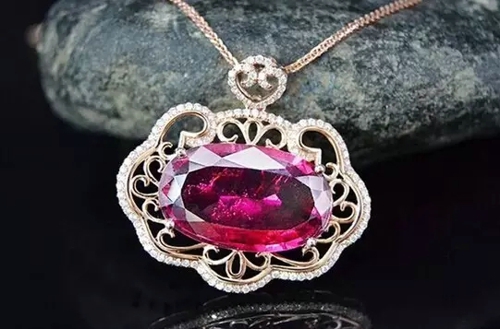
China: Shandong Province in our country is a producer of sapphires, which are renowned for their large crystal size and perfect crystal structure. The Altay region in Xinjiang is an area in China that boasts exceptionally rich gemstone deposits. High-quality aquamarines and tourmalines from China all originate from this region. Topaz, garnet, apatite, and golden beryl are also mined here. Moreover, this region is currently one of China’s premier sources of commercial-grade emeralds, though current production volumes remain relatively modest. Additionally, Lianyungang in Jiangsu Province is known as the “Hometown of Crystals” in China, producing abundant high-quality crystals.
Myanmar: Located in Southeast Asia, Myanmar sits at the collision boundary between the Eurasian Plate and the Indian Ocean Plate. Since ancient times, intense geological activity has shaped Myanmar into today’s global powerhouse in jewelry production. The world’s finest sapphires—known for their “Royal Blue” hue—and top-grade rubies—characterized by their “Pigeon’s Blood” color—both originate from this country. Consequently, the national gemstone of Myanmar is officially designated as the ruby. In addition, Myanmar is also renowned for producing high-quality spinels, green tourmalines, and peridots. During the Ming and Qing dynasties, Myanmar was a vassal state of China, and thus often presented its finest gems as tribute to Chinese princes and nobles. Today, most of the gem materials used in the jewelry collections housed in China’s Palace Museum originate from Myanmar.
Brazil: Brazil is one of the world’s largest producers of gemstones, accounting for approximately 65% of global production of colored gemstones. The country produces large quantities of high-quality gemstones, including rubellite, topaz, aquamarine, and emerald. Brazil is also renowned for a mysterious, electrically luminescent variety of tourmaline known as Paraíba tourmaline, which boasts exceptionally vibrant colors. Its price can reach tens of thousands of dollars per carat, yet demand still far exceeds supply.
Sri Lanka: Sri Lanka is renowned worldwide for its abundant gemstone resources! If you take a moment to trace the country’s outline on a map, wouldn’t you think it resembles a pear-shaped gemstone pendant? Gems sourced from Sri Lanka include sapphires, rubies, chrysoberyls, rose tourmalines, moonstones, aquamarines, garnets, and many others. Virtually all high- and mid-range colored gemstones of exceptional quality are found in Sri Lanka, earning it the nickname “The Gem Island.” The reason Sri Lanka boasts such rich gemstone resources lies in its unique geological structure. With the exception of the Jaffna Peninsula in the north, where no gemstone deposits have yet been discovered, the foothills, river valleys, plains, and hills across the entire country are brimming with abundant gemstone deposits.
Madagascar: Located in the southern Indian Ocean, Madagascar is an island rich in diverse flora and fauna and boasting stunning natural scenery. It lies across the sea from the southeastern part of the African continent. With an area nine times that of Sri Lanka, it is the world’s fourth-largest island. Almost every variety of colored gemstone known to exist can be found on Madagascar, and at least 30 different types are available on the market: emerald, ruby, sapphire, chrysoberyl, aquamarine, beryl, tourmaline, and watermelon tourmaline... Although many of its mining regions were discovered relatively recently, Madagascar is rapidly emerging as a new yet highly significant gemstone-producing region.
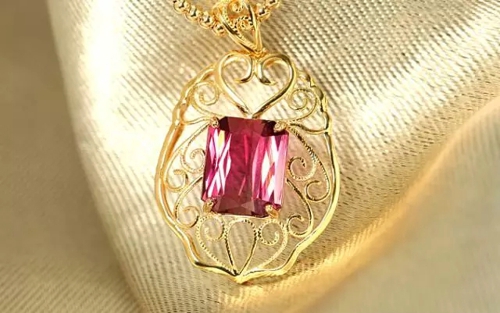
The 4Cs Standard for Tourmaline Gemstone Grading
Often, some friends frequently ask a question: Why are bracelets made of tourmaline beads so large and much cheaper than faceted tourmaline gemstones? Today, let’s talk about tourmaline gemstones. The mineral known as tourmaline is actually called “elbaite,” but not all elbaite can be called tourmaline—and certainly not all elbaite qualifies as a gemstone. As one of the top-ranked colored gemstones, tourmaline, like diamonds, follows the 4C grading system for evaluation and classification. The 4C grading system assesses a gemstone’s quality based on four key factors: color, clarity, cut, and carat weight. To give you a clearer picture, here are the specific grading criteria, drawn from internationally accepted standards:
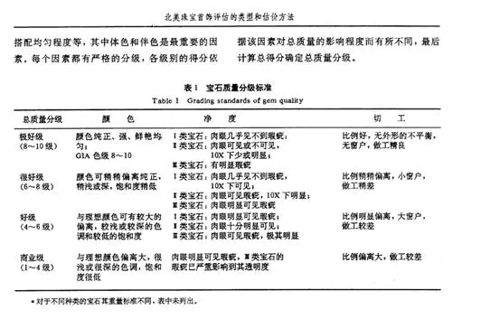
From this chart, friends will surely be able to tell what kind of tourmaline qualifies as a high-quality gemstone. As for “color-changing tourmaline,” we’re confident that after looking at this chart, everyone will understand why those so-called “tourmaline” bracelets on the market are so cheap! In fact, gemstones are extremely difficult to form—any tiny flaw can significantly impact their market price!
Generally, tourmaline is considered a high-end gemstone, with red tourmaline being particularly valuable; consequently, counterfeit products have emerged. There are two common types of counterfeits:
First, it is made to resemble red glass; second, it is color-enhanced synthetic tourmaline that is colorless to begin with.
Actually, another method is simpler: natural tourmaline exhibits a brilliant luster, whereas glass products lack this gem-like brilliance. Artificially colored tourmaline, on the other hand, has a dull and unnatural color, making it easy to identify.
Tourmaline Identification
1) Tourmaline colors: Red and blue tourmalines are considered more valuable, while yellow and green ones are relatively more common. When selecting jewelry set with tourmaline, it’s best to choose pieces featuring red, blue, or green hues, with even and vibrant color distribution. For tourmaline necklaces and bracelets, a rich variety of colors is preferred—each bead can have a different color, allowing for combinations of red, yellow, blue, green, purple, and other shades.
2) Transparency of tourmaline: Tourmaline should be crystal-clear and transparent; the higher the transparency, the better the quality. It should not exhibit any noticeable cloudiness or opacity.
3) Purity of tourmaline: Tourmaline is relatively brittle and prone to cracking. At the same time, it often contains numerous inclusions within its structure. The presence of extensive cracks and inclusions can affect tourmaline’s transparency, color, and brilliance. Tourmaline with an exceptionally pure interior is quite rare and considered a top-grade gemstone. When selecting tourmaline, try to choose specimens with a clean interior.
4) Pay attention to selecting tourmalines with special characteristics: Tourmalines come in a wide variety of colors, but those that exhibit two or more colors within the same stone—known as bicolored or multicolored tourmalines—are particularly valuable. Additionally, watermelon tourmalines, which feature an inner green exterior and an outer red interior, are also highly prized. Moreover, tourmaline cat's-eye gems are considered top-quality among tourmalines. Another notable variety is the ruby tourmaline; although it’s rare and boasts a rich, vibrant color that makes it highly coveted, such tourmalines often suffer from poor clarity.
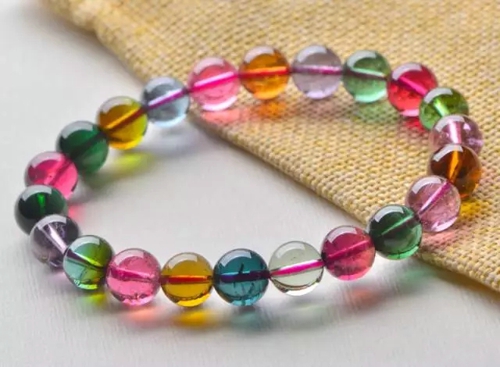
Although tourmaline is mined in many places around the world, high-quality tourmaline travels a long and arduous journey—braving mountains and crossing thorny paths—to reach us. If you’re fortunate enough to own a piece of tourmaline, be sure to cherish it and care for it with great care.
Previous page
Links:
Address: Room 909, 9th Floor, Science & Technology Building, Eastern Software Park, No. 90 Wensan Road, Hangzhou City, Zhejiang Province Telephone:0571-85115488

Scan with your phone
Open the mobile website