
浙江之源资产评估有限责任公司
Optimization Treatment and Identification of Red Coral
Release time:
2015-05-04
Source:
China Jewelry Industry Network

Before being sold, a small number of gemstones undergo enhancement treatments. The methods and purposes of these enhancements can vary depending on the type of gemstone. However, the ultimate goal is always to make them look more beautiful, increase their value, or enhance their durability.
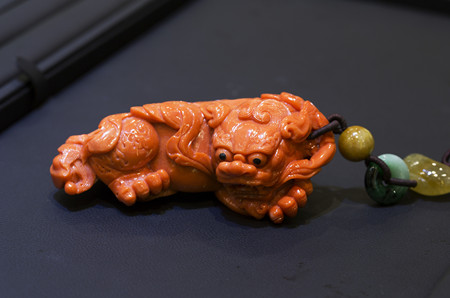
The optimization treatment of red coral consists of two parts: optimization and processing.
Optimization refers to the human-driven enhancement of a gemstone's quality and characteristics. The resulting improvements are consistent, harmless to humans, and widely accepted within the gemological community—therefore, no special mention is required at the point of sale. The goal is to make the gemstone appear more attractive, increase its value, or improve its durability.
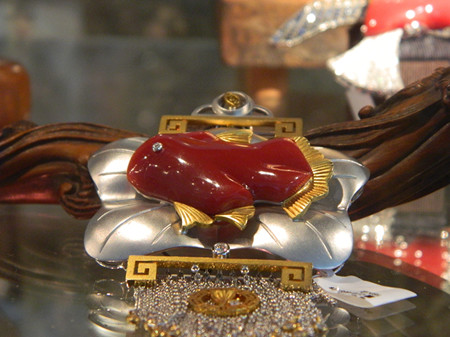
1. Bleaching
After coral is shaped into fine blanks, it is typically bleached with hydrogen peroxide to remove its cloudy color—especially in dead coral branches, which would otherwise appear dull yellow if left unbleached. Generally, dark-colored corals can be bleached to produce lighter shades: for example, black coral can be bleached into a golden yellow, while dark red coral can be bleached into a pinkish hue.
2. Wax immersion
A method of filling the cracks near the surface and surface depressions of coral with molten wax to enhance its appearance. This traditional enhancement technique primarily aims to improve the coral’s visual appeal and may also help deepen the color and improve density.

Treatment refers to non-traditional treatment methods that are not yet widely accepted. When gemstones undergoing treatment are sold in the market, it is mandatory to disclose their authenticity as having been artificially treated.
1. Dyed coral
White coral is dyed by soaking it in organic dyes of red or other colors to achieve the desired hue. The simplest method for identifying dyed coral is to wipe it with a cotton swab dipped in acetone. If the cotton swab becomes stained, it can be confidently determined that the coral has been dyed. Additionally, dyed coral typically exhibits dull colors and uneven coloring—both on the surface and internally. The pigment tends to accumulate in small cracks and pores, resulting in darker outer layers and lighter inner layers, with an overall uneven distribution of color. Once worn, dyed coral is prone to fading or losing its luster.
2. Filling treatment
Poor-quality coral with numerous pores is filled with substances such as epoxy resin. Coral that has undergone this filling treatment has a lower density than normal coral; in the thermal needle test, resin and other substances may leach out of the filled coral.
3. Film-coating treatment
Coral with a loose texture or poor color can be coated with a film; a common material used for this purpose is black coral. Film-coated black coral exhibits a stronger luster and smoother, less pronounced papillary projections. When wiped with acetone, it shows signs of color fading.
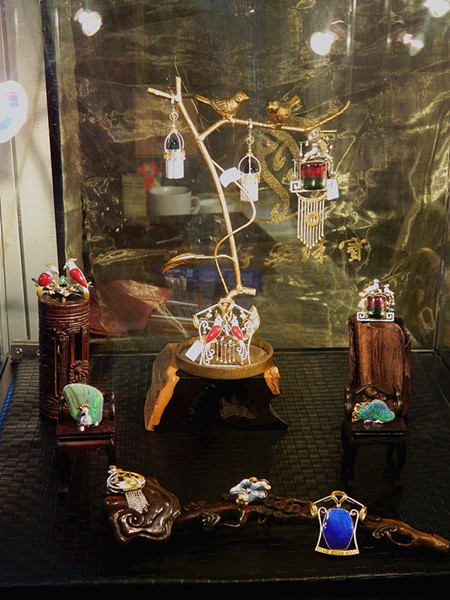
Red coral is a rare organic gemstone, and the market strictly regulates its sale. The quantity of red coral available for circulation and sale is extremely limited, and high-quality coral is even rarer. Therefore, it’s understandable that merchants sometimes resort to certain enhancement treatments on coral. If consumers have any doubts about the quality of the coral, they can directly ask the store staff; generally, they’ll receive a satisfactory answer. If they still aren’t convinced, they can take the coral to the National Jewelry and Jade Quality Inspection Center for testing.
Links:
Address: Room 909, 9th Floor, Science & Technology Building, Eastern Software Park, No. 90 Wensan Road, Hangzhou City, Zhejiang Province Telephone:0571-85115488

Scan with your phone
Open the mobile website