
浙江之源资产评估有限责任公司
Analysis of the Current Status of Global Graphite Mineral Resources and the International Trade Landscape
Release time:
2018-10-22
Source:
China Mining News, September 3, 2018
In recent years, graphite has been increasingly applied in strategic emerging industries such as electronic communications, lithium-ion batteries, aerospace, biomedicine, environmental protection, and new energy. Currently, the focus of graphite consumption is shifting from traditional industries to strategic emerging ones. For this very reason, graphite is set to become a resource attracting considerable attention.
Analysis of the Current Distribution Status of Graphite Resources
The world’s major graphite deposits are located primarily in China, Europe, Mexico, the United States, Austria, Brazil, Canada, Germany, and Madagascar. According to data from the U.S. Geological Survey, the world’s current graphite reserves amount to 250 million tons.
Reserves of global graphite resources
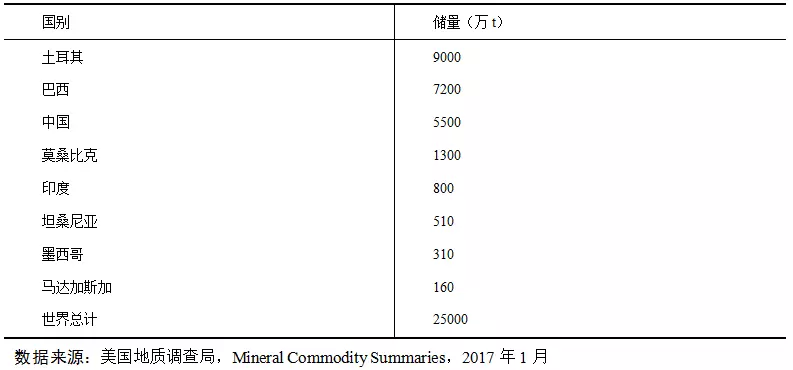
China’s actual reserves of graphite may be higher than the figures published by the USGS. According to USGS data, China’s graphite reserves have remained at 55 million tons since 2009. However, according to the “China Mineral Resources Report 2016,” China’s identified reserves of crystalline graphite in 2016 totaled 299.8174 million tons. Based on extensive surveys and analysis of historical data, combined with empirical values obtained through these studies, we estimate that China’s “reserves”—which can be compared with the USGS’s “reserve” data—amount to 239.85 million tons.
China is rich in graphite resources and exhibits a high degree of resource concentration. In 2016, the proven reserves of crystalline graphite totaled 299.8174 million tons, primarily concentrated in provinces and autonomous regions including Heilongjiang, Inner Mongolia, Sichuan, Shanxi, and Shandong. The proven reserves in each of these regions exceed 10 million tons, accounting for a combined 61.89% of the nation's total reserves.
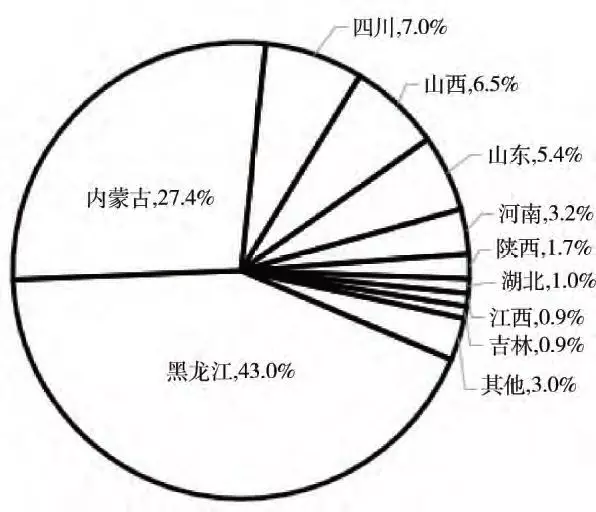
2016 China’s Distribution of Crystalline Graphite
Current Status of Graphite Resource Production
Global natural graphite production is highly concentrated, with the main producers being China, India, and Brazil.
From 2011 to 2016, global natural graphite production remained largely stable. China has consistently ranked first in the world in terms of output, accounting for approximately 65% of the global total each year. India ranks second globally in graphite production, with its annual output accounting for around 14% of the world’s total. Brazil, North Korea, and Canada occupy third through fifth places, each maintaining a share of roughly 7%, 3%, and 2% of the global total, respectively. North America’s natural graphite production accounts for 4% of the global total, primarily coming from Canada and Mexico; the United States does not produce natural graphite.
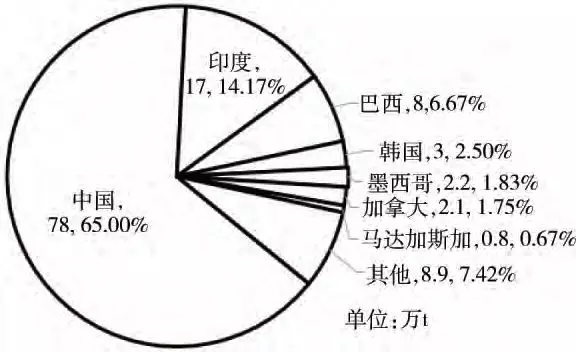
Global Natural Graphite Production Distribution in 2016
International Graphite Resource Trade Landscape
Globally, natural graphite is primarily... Importing country Main graphite for Japan, China, Germany, the United States, India, Canada, and others. Exporting country For China, Brazil, Germany, the United States, Mexico, and others.
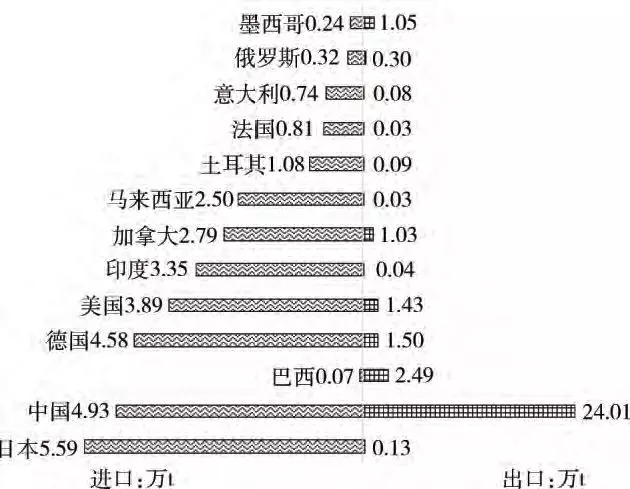
2016 Global Major Import and Export Countries and Volumes of Graphite
Analysis of the Current Status of Global Import Trade
In 2016, global imports of natural graphite totaled 397,300 tons. The main importing countries were Japan, China, Germany, the United States, and India, among others.
Japan In 2016, Japan was the world’s largest importer of graphite and one of its major consumers. In 2016, it imported 55,900 tons of natural graphite, of which 90.85% came from China. Its exports consisted primarily of highly processed products; in 2016, exports totaled only 1,320 tons, yet the average export value reached as high as US$11,480.67 per ton. Major export destinations included South Korea, Thailand, China, and the United States.
China China is the world’s second-largest importer of graphite, with most of its graphite coming from North Korea. In 2016, China’s total graphite imports amounted to 49,300 tons, of which 95.03% were sourced from North Korea.
Germany Germany is the world’s third-largest importer of natural graphite. In 2016, it imported 45,800 tons of natural graphite, of which 54.23% came from China. In 2016, Germany exported 15,000 tons, primarily to neighboring countries such as the Czech Republic, Austria, and France.
United States The United States is the world’s fourth-largest importer of natural graphite. In 2016, it imported 38,900 tons of natural graphite, primarily from countries such as China, Mexico, and Canada. In 2016, it exported 14,300 tons, mainly to neighboring countries including Canada and Mexico.
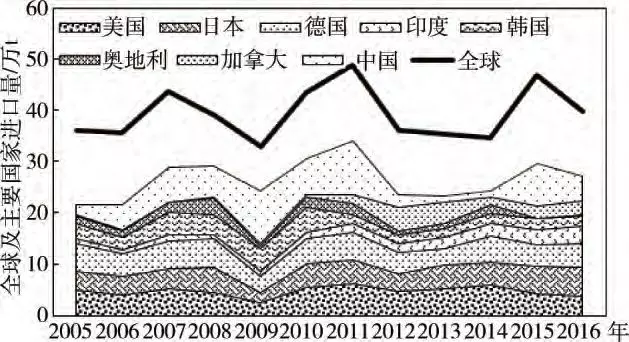
Changes in Global and Major Countries’ Graphite Import Volumes from 2005 to 2016
Analysis of the Current Status of Global Export Trade
In 2016, global graphite exports totaled 353,500 tons. The main exporting countries included China, North Korea, Germany, Brazil, the United States, Mexico, and Canada. Global graphite supply is highly concentrated, with China being the largest exporter.
North Korea
North Korea is the world’s second-largest exporter of natural graphite. In 2016, its total exports amounted to 47,300 tons, accounting for 11.80%. Due to geopolitical factors and other influences, the volume of graphite exported by North Korea to China reached 46,900 tons, representing 99.2% of its total exports.
Brazil
Brazil is the world’s third-largest exporter of natural graphite. In 2016, its total exports amounted to 24,900 tons, with a unit value of approximately US$1,136.62 per ton. The main export destinations include Germany, the United States, Poland, Belgium, and India.
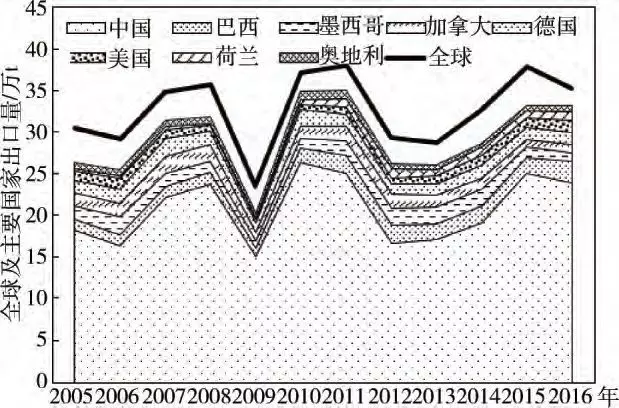
Changes in Global and Major Countries’ Graphite Export Volumes from 2005 to 2016
Overall characteristics of the global graphite trade
The major global net importers of graphite include Japan, the United States, Germany, India, Malaysia, Canada, and South Korea; while the few global net exporters of graphite are primarily countries such as China, Brazil, and Mexico. Among these, developing countries like China and Brazil mainly export primary products, whereas developed countries such as Japan and the United States predominantly export deeply processed graphite products. The United States, Japan, and other developed countries in Europe rarely exploit their own domestic natural graphite resources—or, if they do, such resources are scarce—and thus rely heavily on imports to meet their graphite demand.
China is the world’s largest exporter of graphite, accounting for the majority of the global graphite export market. In 2016, China ranked first in global natural graphite exports, followed by North Korea in second place and Brazil in third. Additionally, countries such as the United States and Germany also export certain quantities of graphite; however, given that these countries do not have their own graphite mines, their exports likely represent secondary exports—products that have been further processed after importing raw materials.
The overall characteristics of the global graphite trade are a relatively dispersed demand side and a highly concentrated supply side. Currently, the global natural graphite trade is structured around a few key supplier countries—such as China, Brazil, and Mexico—and a group of major demand countries—including Japan, the United States, Germany, India, Malaysia, Canada, and South Korea.
Previous page
Links:
Address: Room 909, 9th Floor, Science & Technology Building, Eastern Software Park, No. 90 Wensan Road, Hangzhou City, Zhejiang Province Telephone:0571-85115488

Scan with your phone
Open the mobile website