
浙江之源资产评估有限责任公司
2017 China Aluminum Industry Market Supply and Demand Forecast and Price Trend Analysis
Release time:
2017-05-12
Source:
China Industry Information Network
The aluminum industry chain consists of four main stages: bauxite mining, alumina refining, primary aluminum production, and aluminum product processing. First comes bauxite mining; then, through processes such as dissolution, filtration, acidification, and calcination of bauxite, alumina is extracted. Next, primary aluminum is produced via the electrolysis of molten alumina. After being remelted and refined, primary aluminum can be further processed into various aluminum products, aluminum alloys, and aluminum powders. From small items like beverage aluminum cans and mobile phone back covers to large-scale applications such as high-speed trains, Boeing 777 aircraft, and the Shenzhou spacecraft, aluminum and aluminum alloy materials are widely used across numerous fields—including architectural decoration, electronics and appliances, transportation, and mechanical equipment—touching every aspect of both daily life and advanced technology.
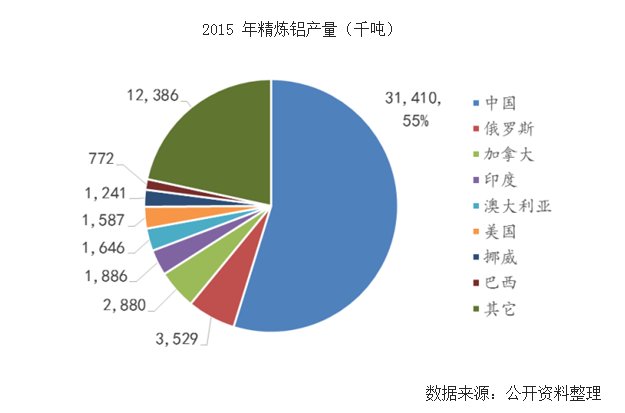
In 2015, global production of refined aluminum totaled approximately 57 million tons. As the world’s largest producer and consumer of aluminum, China accounted for 55% of global output, followed by Russia, Canada, India, Australia, the United States, Norway, Brazil, and other countries—all of which are either major aluminum resource regions or significant consumers. The combined capacity of these eight countries accounted for 78.3% of global production, indicating a highly concentrated production structure. Developing countries contributed an even larger share of global output.
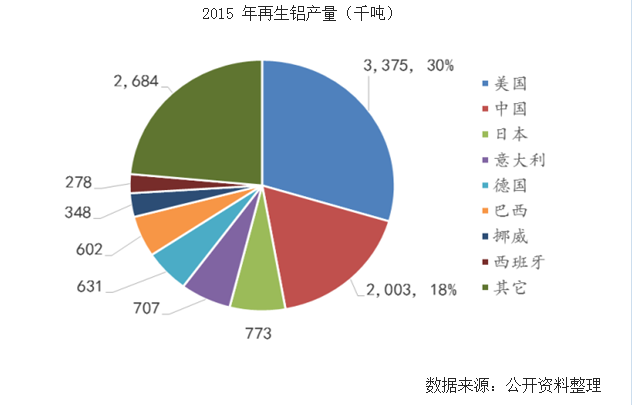
The output of recycled aluminum has also been increasing year by year, reaching 11.25 million tons in 2015, accounting for only 16.5% of total aluminum production. Since the process of producing primary aluminum from bauxite requires substantial bauxite resources and energy consumption, and as aluminum finds ever-wider applications, more and more scrap aluminum is generated. Recycling scrap aluminum can save over 95% of the energy consumed and reduce carbon dioxide emissions by more than 90% compared to the conventional process of producing aluminum through bauxite-to-electrolytic-aluminum smelting. This makes aluminum recycling highly beneficial both environmentally and economically. Currently, the United States is the largest producer of recycled aluminum, accounting for 30% of global output. China, Japan, Italy, Germany, Brazil, Norway, and Spain follow closely behind. The top eight producing countries together account for 76.1% of global output, indicating an extremely high level of concentration. Among the countries producing recycled aluminum, developed nations have seen a significant increase in their share of output—mainly because these countries possess larger stockpiles of aluminum products.
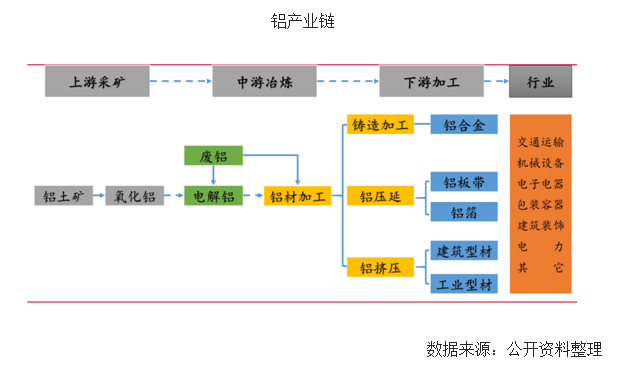
Electrolytic aluminum remains the absolute mainstream today, accounting for 83.5% of total primary aluminum production. As can be seen from the electrolytic aluminum production process, its main costs are alumina, electricity, and anode carbon. In the medium to long term, while bauxite and alumina supplies are relatively abundant, the proportion of anode carbon sourced internally by electrolytic aluminum plants will increase, making electricity costs the most significant factor influencing the overall cost of electrolytic aluminum production.
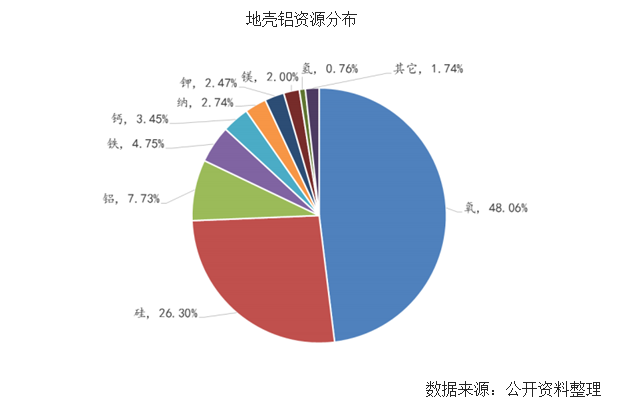
Aluminum is an extremely abundant metallic resource on Earth, ranking third among the elements in the Earth's crust—surpassed only by oxygen and silicon—and accounting for as much as 7.73%. However, aluminum has been used industrially for just over 100 years, making it a relatively new industrial metal. Aluminum boasts exceptional malleability, ductility, and ease of machining, as well as excellent corrosion resistance and durability. Whether measured in terms of quantity or value, aluminum surpasses all other metals except iron and plays a crucial role in many aspects of the global economy.
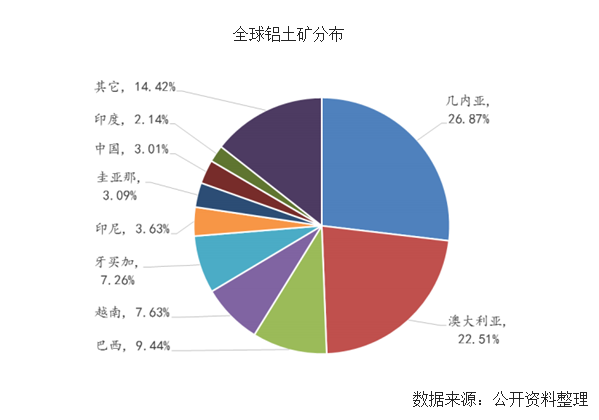
Bauxite, a collective term for ores composed primarily of gibbsite, diaspore, or boehmite, had global reserves reaching 27.54 billion tons according to 2015 statistics. Among these reserves, Guinea and Australia held 7.4 billion tons and 6.2 billion tons respectively, accounting for 26.87% and 22.51% of the global total—far exceeding the reserves held by any other country worldwide. China’s bauxite resources are relatively scarce, ranking eighth with reserves of 830 million tons. In 2015, global bauxite production totaled 274 million tons, and the reserve-to-production ratio was close to 100, indicating a high level of resource security for bauxite.
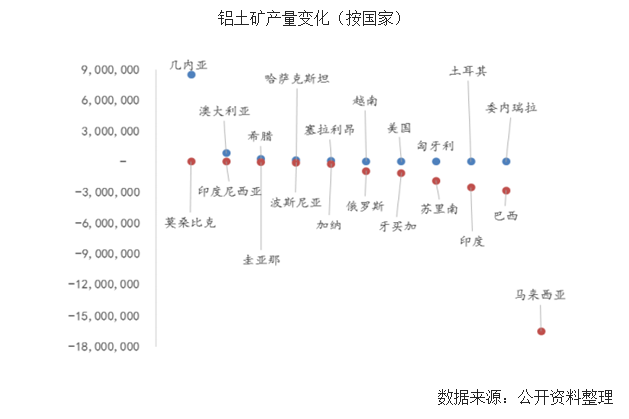
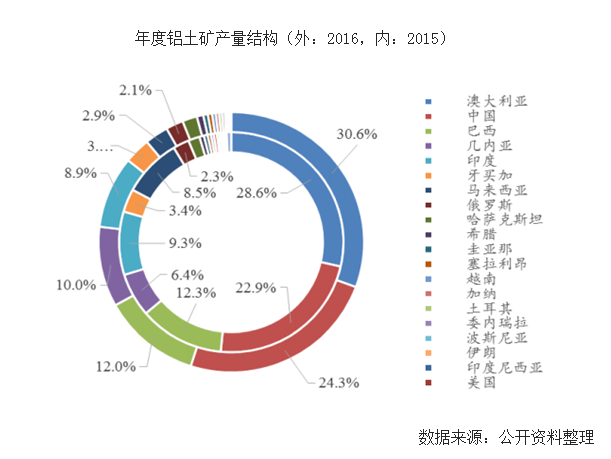
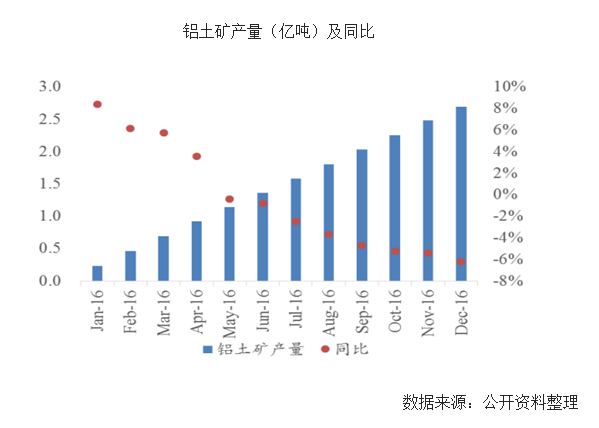
In terms of bauxite production, global bauxite output in 2016 reached 269 million tons, a decrease of 178.773 million tons compared to the same period last year, representing a decline of 6.23%. Among the countries, 10 saw an increase in production, totaling 98.551 million tons, while 11 countries experienced a decline, with total output reaching 260.853 million tons. By country, the major producers that increased their output were Guinea, Australia, and Greece, whose 2016 production rose by 84.942 million tons, 831,000 tons, and 268,300 tons, respectively—corresponding to growth rates of 46.9%, 1.0%, and 14.7%. Among the 11 countries that saw a decline in production, Malaysia, India, Brazil, Suriname, Jamaica, and Russia all reported reductions exceeding 800,000 tons. Notably, Suriname has completely halted bauxite production due to depletion of its mineral resources. The declines in production from Russia, Brazil, Jamaica, and India all hovered around 10%. The most severe drop occurred in Malaysia, where cumulative bauxite supply fell by 165.229 million tons in 2016, representing a year-on-year decline of 68.3%. Following Indonesia's ban on bauxite mining in 2014, Malaysia imposed a three-month ban on all mining activities starting January 15, 2016, and subsequently extended this ban three times throughout 2016. At the end of December 2016, Malaysia's Minister of Natural Resources and Environment announced that the bauxite mining ban would be extended for another three months, effective December 31. Malaysia's production restrictions have had a significant impact on the global supply of bauxite.
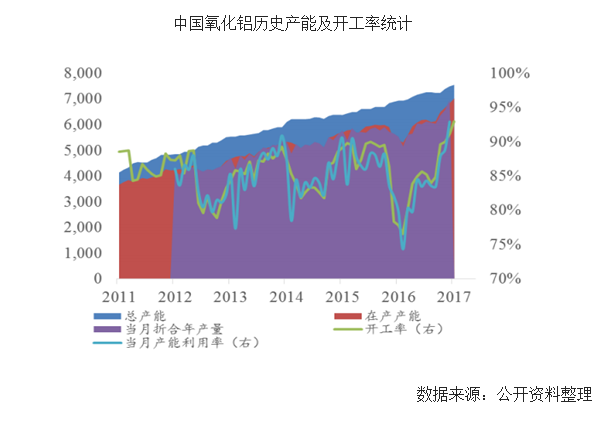
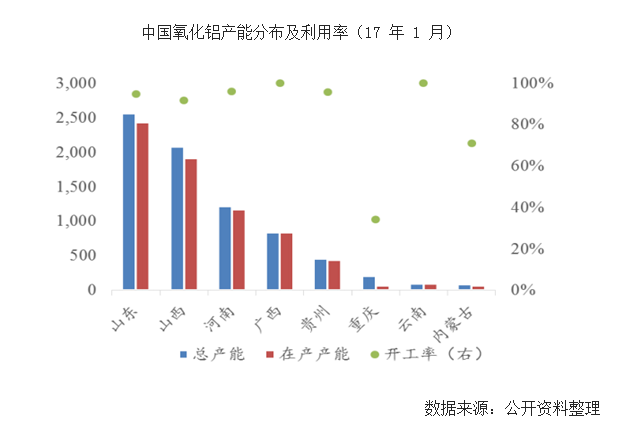
China’s alumina production capacity exhibits two key characteristics: First, its capacity has been steadily expanding—from 41.14 million tons in 2011 to 75.56 million tons as of January 2017, with an average annual compound growth rate of 10.7%. The capacity utilization rate has experienced three periods of low points: it fell below 80% in the first half of 2012, approached 80% in mid-2014, and dropped to 76.6% in early 2016. Recently, with the recovery of aluminum and alumina prices, the capacity utilization rate has reached a nearly six-year high of 93.0%. Second, production capacity is highly concentrated. Geographically, China’s alumina production capacity is distributed across eight provinces and regions. Among these, Shandong, Shanxi, Henan, Guangxi, and Guizhou account for 94.8% of the nation’s total capacity; the top three provinces—Shandong, Shanxi, and Henan—alone account for 77.7% of the national total, and these provinces are located in the vicinity of the Beijing-Tianjin-Hebei region.
In September 2013, the State Council issued and implemented the “Ten Measures for Air Pollution Control,” setting a goal that by 2017, the annual average concentration of PM2.5 in the Beijing-Tianjin-Hebei region would decline by 25%. Specifically, Beijing’s annual average PM2.5 concentration would be controlled at around 60 micrograms per cubic meter. At the same time, the “Implementation Details for the Action Plan to Combat Air Pollution in the Beijing-Tianjin-Hebei Region and Surrounding Areas,” also released during this period, further specified that by 2017, the annual average PM2.5 concentrations in Beijing, Tianjin, and Hebei Province would decline by approximately 25% compared to 2012 levels; Shanxi Province and Shandong Province would see declines of about 20%; and the Inner Mongolia Autonomous Region would experience a decline of 10%. Among these, Beijing’s annual average PM2.5 concentration would be controlled at around 60 micrograms per cubic meter.
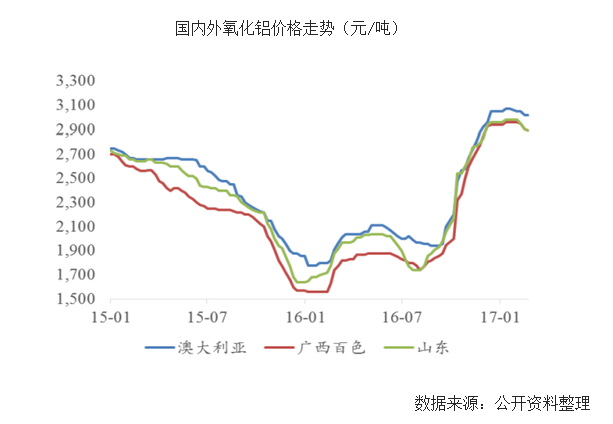
As a globally traded product, the price trends of domestically produced alumina and imported alumina are almost identical. At the beginning of 2016, prices hit their lowest point in nearly two years; after a mid-year rebound, they have been trending steadily upward, with a slight recent decline. From the perspective of price movements, the price fluctuations of imported alumina have been slightly lagging and more gradual.
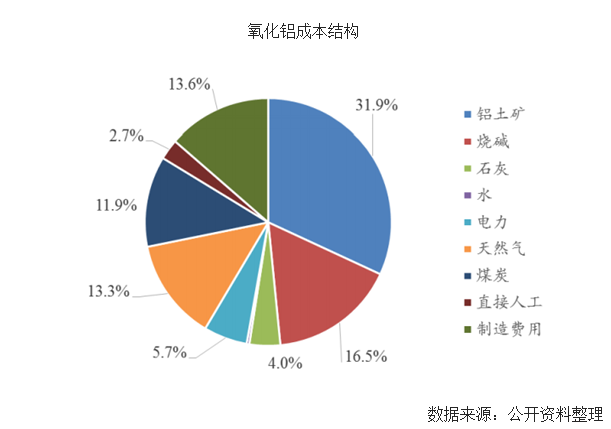
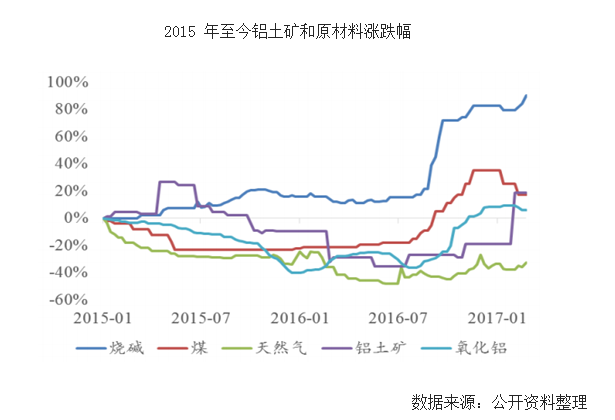
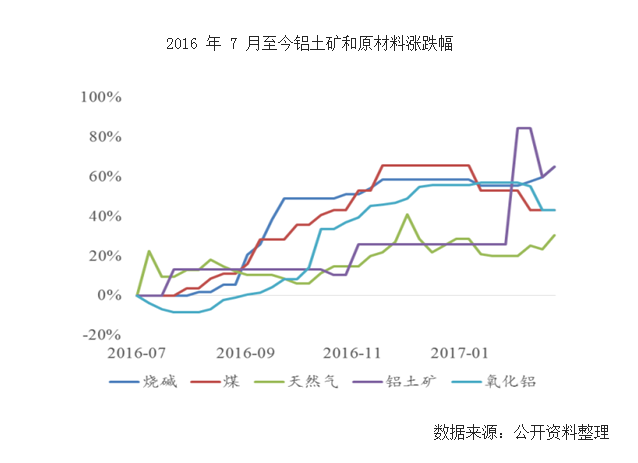
From the perspective of alumina’s cost structure, costs for lime, water, labor, electricity, and manufacturing expenses are relatively fixed. The main variable costs—bauxite, caustic soda, and energy—account for a relatively large share: bauxite, caustic soda, natural gas, and coal account for 29.3%, 17.2%, 13.8%, and 12.4%, respectively. Since 2015, with the exception of a general decline in natural gas prices, the prices of all other materials have risen. Since the second half of 2016, the prices of alumina and all variable cost components have increased significantly. In particular, the price of caustic soda has surged from around 2,300 yuan per ton to nearly 4,000 yuan per ton, while the price of coal has risen from 400 yuan per ton to a peak of 670 yuan per ton—a rise of 58.6% and 65.4%, respectively. Imported bauxite prices have risen by more than 20%, with a recent sharp upward trend; even domestic low-grade bauxite with an Al/Si ratio of 5 and 6 has seen price increases approaching 20%. Natural gas prices have also risen by nearly 20%. Overall, since the second half of 2016, rising raw material prices have driven up alumina production costs by more than 20%.
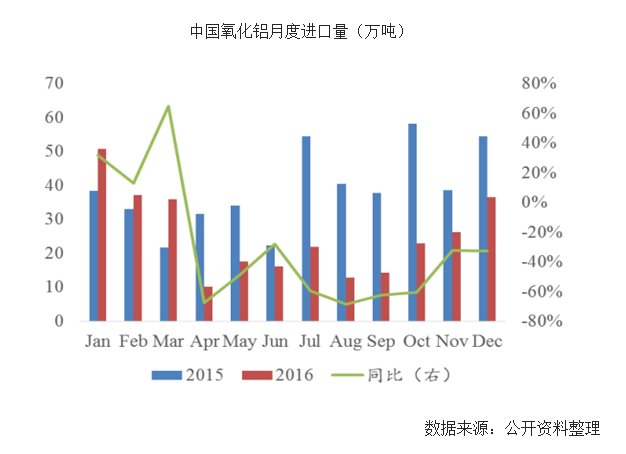
With large-scale production cuts in overseas bauxite mines, the supply of alumina has also been affected, directly leading to a significant reduction in China’s alumina imports. In April 2016, alumina imports fell by more than 60% year-on-year. For the entire year of 2016, alumina imports totaled 3.026 million tons, a decrease of 1.627 million tons, or 35%, compared to the previous year. This sharp decline in alumina imports disrupted the original supply-demand balance and pushed up alumina prices.
Links:
Address: Room 909, 9th Floor, Science & Technology Building, Eastern Software Park, No. 90 Wensan Road, Hangzhou City, Zhejiang Province Telephone:0571-85115488

Scan with your phone
Open the mobile website