
浙江之源资产评估有限责任公司
Analysis of the Current Status and Development Trends of the Coal Industry in 2016
Release time:
2016-04-11
Source:
Coal Network, March 30, 2016
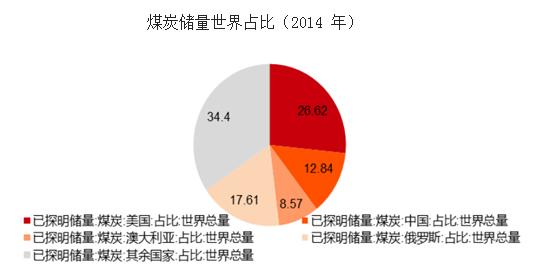
China’s total coal reserves amount to 5.9 trillion tons, accounting for 94% of the country’s total primary energy resources, while oil and natural gas reserves account for only 6%. Moreover, it is increasingly difficult to boost production of oil and natural gas, resulting in a high degree of dependence on foreign sources.
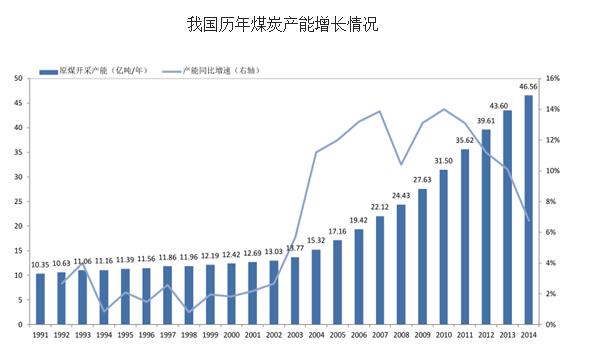
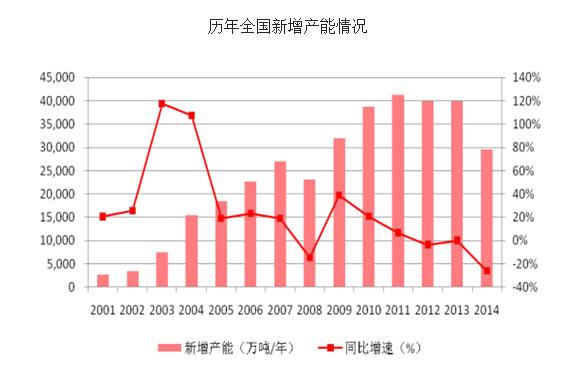
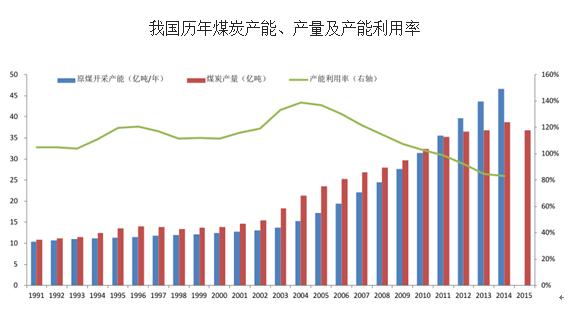
Since 2006, the nation’s cumulative coal investment has reached 3.6 trillion yuan, with a total newly added production capacity of nearly 3 billion tons. Among this, during the 12th Five-Year Plan period, cumulative investment totaled 2.35 trillion yuan, averaging nearly 500 billion yuan per year. According to statistics as of the end of 2015, the country’s total coal mine capacity stood at 5.7 billion tons. In 2015, China’s total coal consumption was 3.75 billion tons. Of the 5.7 billion-ton capacity, according to data from the National Energy Administration, 3.9 billion tons were in normal operation or undergoing renovation, 308 million tons were temporarily shut down, and 1.496 billion tons were under construction or undergoing expansion and renovation. As disclosed by the National Energy Administration, approximately 800 million tons of this capacity represents unapproved, non-compliant projects.
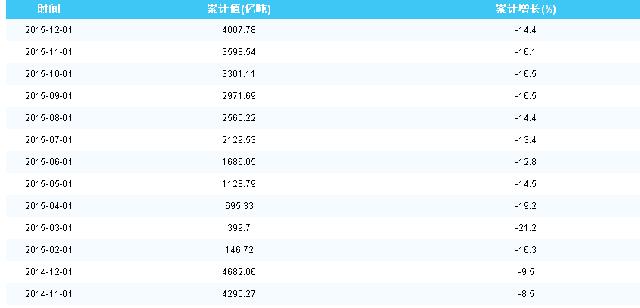
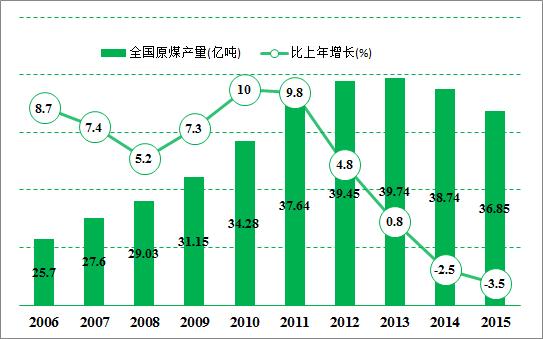
The image shows: National production trends over the years.
As of the end of 2015, the nation's total coal capacity stood at 5.7 billion tons, of which 3.9 billion tons were from mines in normal production or undergoing renovation, 310 million tons were from mines that had ceased operations, and 1.5 billion tons came from newly built, expanded, or renovated mines—among which approximately 800 million tons were unauthorized, non-compliant projects.
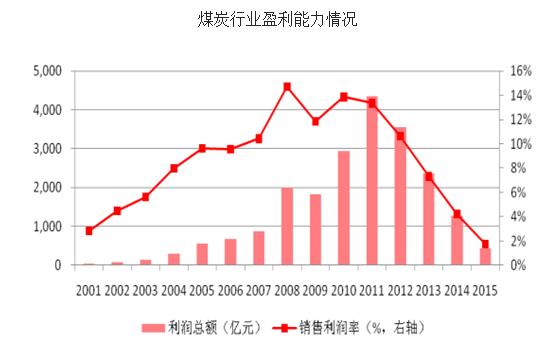
Since 2001, the coal industry’s profitability has been like a roller coaster: as industry conditions improved, total profits surged from 4.2 billion yuan in 2001 to a historical high of 434.2 billion yuan in 2011—a nearly tenfold increase. However, subsequently, affected by overcapacity in the industry, total profits plummeted sharply, falling to just 44.1 billion yuan in 2015—equivalent to the levels seen in 2004 and 2005. The net profit margin closely mirrored the trend of total profits: it remained at a high level of 14% from 2010 to 2011, but then declined dramatically, dropping to only 1.8% by 2015—a decline of 87%—and even falling below the levels observed before the industry’s recovery began in 2001. Profitability performance is expected to remain even more dismal going forward.
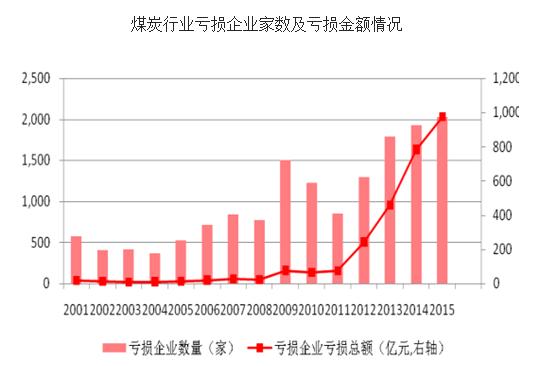
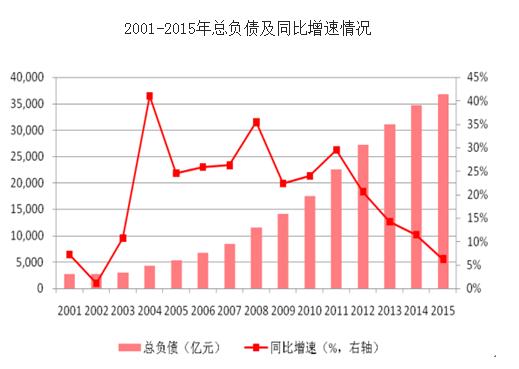
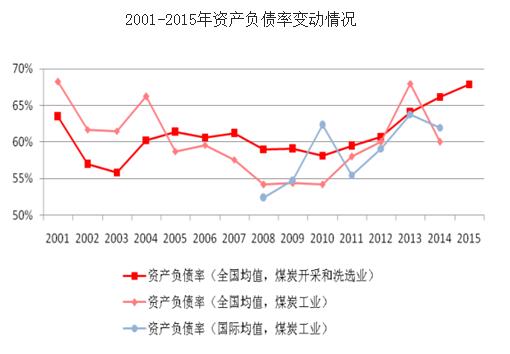
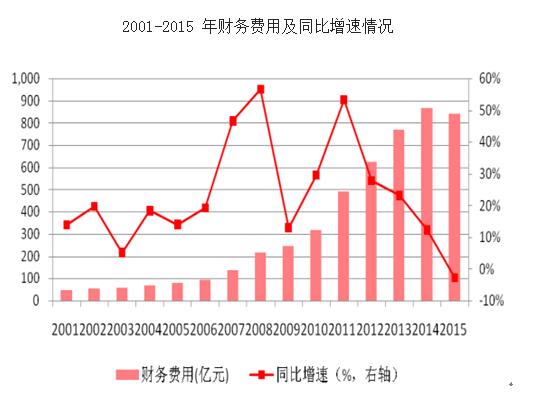
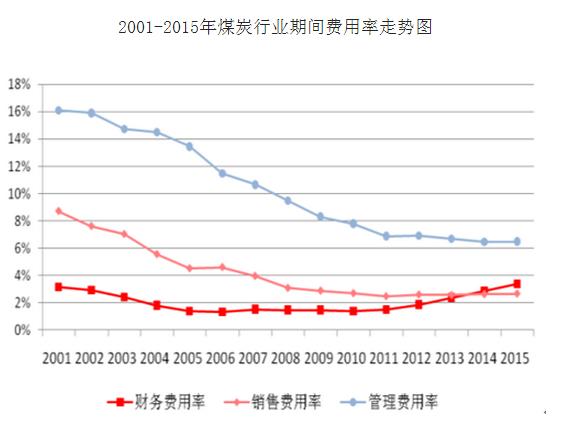
According to statistics from the National Bureau of Statistics, as of the end of December 2015, the coal mining and washing industry employed 4.424 million people. This figure represents a reduction of 887,400 people—equivalent to a 16.71% decline—from the peak of 5.3114 million recorded at the end of 2011.
As of the end of 2015, the number of coal mines nationwide stood at 10,800. Among these, there were 1,050 large-scale coal mines with an annual output exceeding 1.2 million tons—400 more than in 2010. The share of total output from these large mines rose from 58% to 68%. Meanwhile, the number of small coal mines with an annual output of less than 300,000 tons exceeded 7,000—more than 4,000 fewer than in 2010. The share of total output from these small mines declined from 21.6% to around 10%.
The proportion of large, modern coal mines continues to rise, significantly enhancing the nation’s capacity to ensure coal supply. Construction of major coal bases is steadily advancing. The output from the 14 large-scale bases accounts for approximately 92.3% of the country’s total coal production, an increase of 4.3 percentage points compared to 2010. Eight provinces and regions now produce over 100 million tons of coal, accounting for 84.1% of the national output—a rise of 8 percentage points. During the 12th Five-Year Plan period, the concentration of China’s coal industry increased. The top four coal enterprises produced 868 million tons, representing 23.6% of the national total, up 1.6 percentage points from 2010. The output of the top eight enterprises reached 1.31 billion tons, accounting for 35.5% of the national total—an increase of 5.4 percentage points. Nine enterprises—Shenhua, Tongmei, Shandong Energy, Shaanxi Coal & Chemical Industry, China National Coal Group, Yankuang, Shanxi Coking Coal, Jizhong Energy, and Henan Energy—each produced over 100 million tons of coal, four more than in 2010. Their combined output totaled 1.41 billion tons, representing 38.2% of the national total—a rise of 13 percentage points.
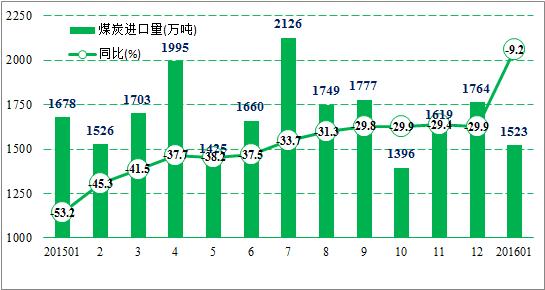
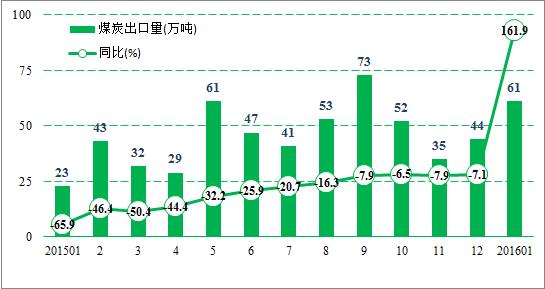
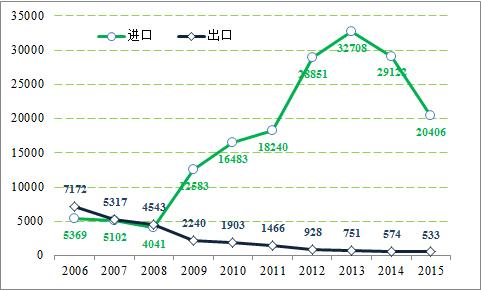
The “golden decade” of the coal market has attracted massive capital from a wide range of other industries, drawing them into investments in this sector. Even industries that had nothing to do with coal—such as real estate—have jumped into the coal industry, creating a veritable nationwide rush to mine coal. According to relevant data, since 2006, China’s cumulative fixed-asset investment in the coal mining and beneficiation industry has reached 3.3 trillion yuan. At an investment rate of 800 yuan per ton of capacity, this 2.3 trillion yuan in investment has already created a production capacity of 4 billion tons. Adding to this the over 1 billion tons of coal mines currently under construction nationwide, along with the capacity from some illegally built mines, even accounting for the elimination of outdated capacity in the coming period, China’s overall coal production capacity is already severely oversupplied. It can be said that overheated investment is the fundamental cause behind the deep adjustment now underway in the coal market.

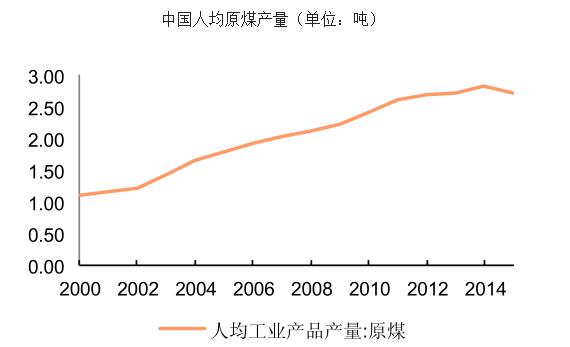
Over the past two decades, from 1994 to 2015, China’s GDP growth rate declined from 13.1% in 1994 to 7.6% in 1999, then rebounded sharply to 14.2% by 2007, only to fall again to 6.9% in 2015—marking the lowest annual GDP growth rate in more than two decades. As for energy consumption per unit of GDP, it has almost consistently shown a downward trend, dropping from 1.39 tons of standard coal per 10,000 yuan in 1994 to 0.662 tons of standard coal per 10,000 yuan in 2015, with a cumulative reduction exceeding 50%. Similarly, the share of coal in total energy consumption has also been on a nearly steady decline, falling from 75% in 1994 to 64% in 2015—a cumulative drop of over 10 percentage points. Clearly, GDP growth has been the primary driver behind the increase in coal demand.
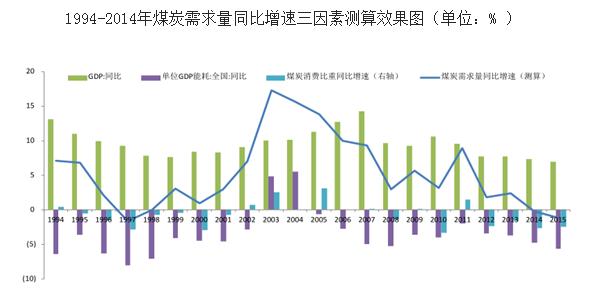
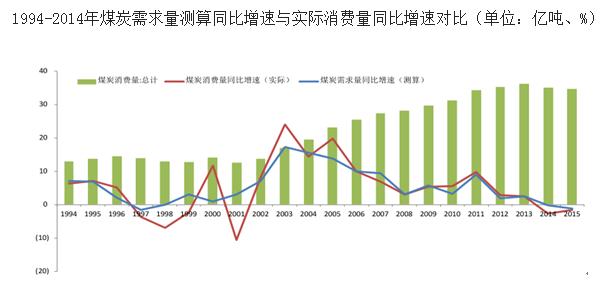
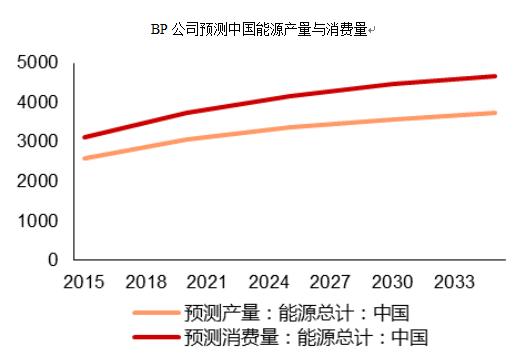
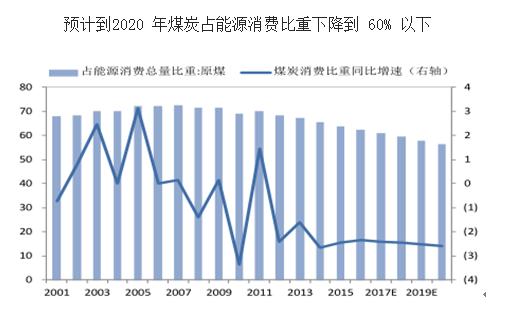
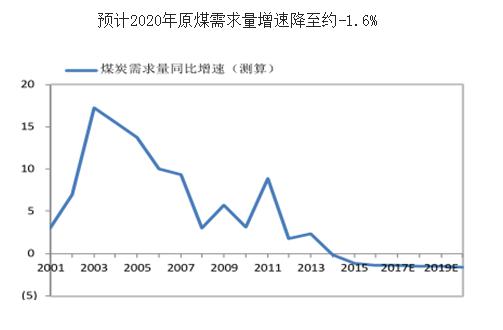
In 2015, coal consumption accounted for 64.0% of China’s total energy consumption, while the share of clean energy sources—including hydropower, wind power, nuclear power, and natural gas—stood at 17.9% of the total. As China adjusts its energy mix, coal’s share in the country’s energy structure will decline from over 60% today to below 50% in the future. Recently, at the international seminar on the “13th Five-Year Plan”—China’s Coal Control Planning Study—China’s Coal Control Project Team released the “Research Report on China’s Total Coal Consumption Control Plan.” The report points out that by 2020, China’s total coal consumption should be capped at 2.72 billion tons of standard coal, equivalent to no more than 3.8 billion tons of physical coal, with total energy consumption limited to 4.74 billion tons of standard coal. To achieve these coal control targets, coal’s share in total energy consumption will drop to 57.4%, a decrease of 8.2 percentage points compared to 2014. It is now virtually certain that coal consumption will be significantly reduced during the 13th Five-Year Plan period. The “Energy Development Strategy Action Plan (2014-2020)” has set forth China’s strategic guidelines and targets for 2020: By 2020, total primary energy consumption will be capped at 4.8 billion tons of standard coal, with total coal consumption limited to 4.2 billion tons; non-fossil energy will account for 15% of total primary energy consumption, natural gas will make up more than 10%, and coal’s share in total energy consumption will be kept within 62%. Assuming that China’s GDP growth rate remains at 7% year-on-year from 2016 to 2020 and energy intensity per unit of GDP declines by 6% annually, by 2020 coal’s share in total energy consumption will fall to 56.5%. Under these assumptions, we estimate that China’s average annual growth rate of coal demand will slow down to -1.59% by 2020.
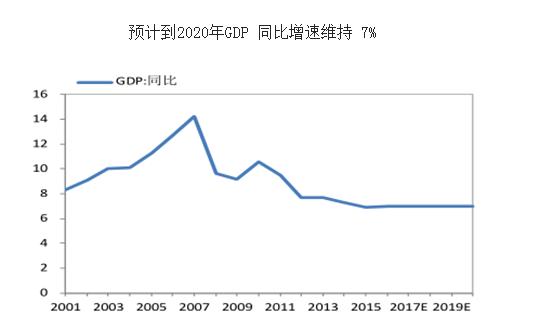
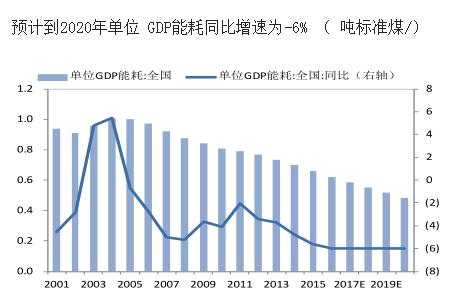
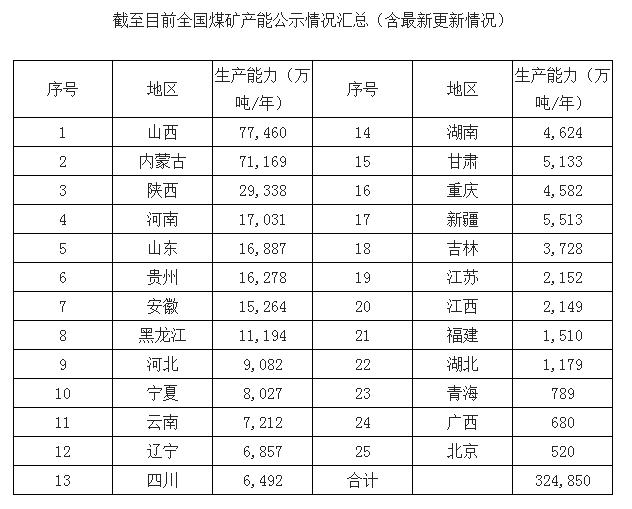
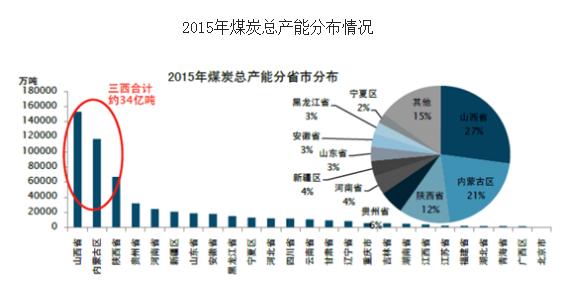
According to statistics, as of the end of 2015, China’s total coal mine production capacity reached 5.647 billion tons. Of this total, 3.923 billion tons came from operating mines, 740 million tons from mines undergoing renovation and expansion, 916 million tons from newly built mines, and 68 million tons from mines whose licenses had been revoked. In terms of capacity distribution, 27% of China’s coal production capacity is located in Shanxi Province, amounting to a staggering 1.53 billion tons (including 74 million tons per year of capacity from the 13 unapproved coal mines announced by Shanxi Province). Of this, 1.04 billion tons comes from operating mines, and 488 million tons from newly built and expanded mines. Next is Inner Mongolia, with a capacity of 1.17 billion tons, accounting for 21% of the nation’s total capacity. Of this, 810 million tons are from operating mines, and 560 million tons from newly built and expanded mines. Ranking third is Shaanxi Province, with a total capacity of 670 million tons, of which 400 million tons are from operating mines and 260 million tons from newly built and expanded mines.
Links:
Address: Room 909, 9th Floor, Science & Technology Building, Eastern Software Park, No. 90 Wensan Road, Hangzhou City, Zhejiang Province Telephone:0571-85115488

Scan with your phone
Open the mobile website