
浙江之源资产评估有限责任公司
The Chinese silver jewelry market may soon usher in new opportunities.
Release time:
2022-12-27
Source:
China Mining News
◎ Special Contributor: Shana Li, Correspondent: Fu Yao
In 2022, global demand for silver saw a significant boost, particularly in the areas of silver jewelry and silverware, which have recently become a key focus of attention in the international fashion industry. From major jewelry and fashion brands to fashion bloggers of all kinds—and even consumers themselves—people are starting to ask: Will silver jewelry become the new fashion mainstream and lead the next wave of jewelry trends?
I. Demand is rising rapidly, and silver supply is now in deficit.
According to statistics from British firm Metal Focus, global total silver demand in 2022 rose by 16% year-on-year to 1,210 million ounces, while supply increased by 3% year-on-year to 1,017 million ounces, resulting in a supply gap of nearly 200 million ounces. This marks the first time since 2015 that global silver supply has experienced a deficit.
From the perspective of different end uses, with the exception of photography, where silver demand declined slightly by 1%, all other major silver-consuming sectors showed significant growth. Among these, silver jewelry and silverware emerged as the primary drivers behind the overall increase in silver demand. In 2022, demand for silver jewelry rose by 29% year-on-year to 235 million ounces, while demand for silverware surged by 72% year-on-year to 73 million ounces. Together, these two sectors accounted for 25.5% of global total silver demand, compared to just 21.5% in the previous year.
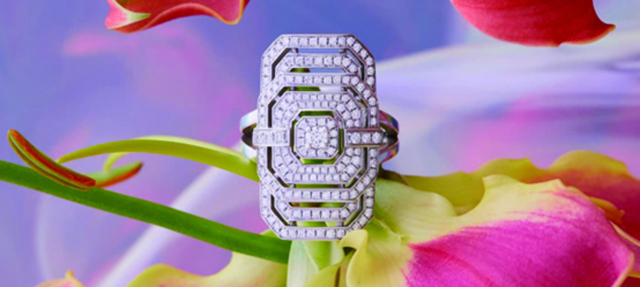
France’s silver jewelry brand Statement’s annual best-selling model: the “Myway” silver ring.
II. The Appeal of Silver: Price or Color?
Compared to gold, silver jewelry enjoys greater consumer appeal thanks to its price advantage. Whether in developing countries with lower per capita incomes or in the fashion-conscious markets of Europe and the U.S., silver jewelry has a broad base of supporters. According to this year’s data, the price of gold is roughly 80 to 100 times that of silver, meaning that with the same budget, choosing silver jewelry can provide consumers with a stronger sense of “satisfaction” both in terms of the variety of styles available and the size of individual pieces.
On the other hand, after several years of continued popularity for gold, silver seems once again to be capturing people’s attention as fashion cycles turn. Recently, the Senior Director of Fine Jewelry and Watches at Threads Styling pointed out in an article published by The New York Times that people are increasingly drawn to the artistic potential of precious metals. For younger customers in particular, silver represents a more avant-garde and modern jewelry choice—not only because of its color but also because of its richer, more imaginative ways of being worn. This past summer, renowned international brands Boucheron and Buccellati prominently showcased their latest silver jewelry collections to the public in Paris. All these signs indicate that silver jewelry is making a comeback—whether in the realm of value-driven consumption or in the high-end fashion market.

III. The Future of China’s Silver Jewelry Industry
As a major global producer and consumer of jewelry, China ranks among the world’s top five in both the production and sales of silver jewelry. However, compared to other jewelry categories, silver has been gradually marginalized over the past seven or eight years, with sustained decline in market attention. Based on recent industry observations, we believe that China’s silver jewelry market is about to emerge from its trough and enter a new phase of growth.
(1) Vast market potential yet to be tapped
Compared to the markets in developed countries in Europe and the U.S., China’s silver jewelry market share remains relatively low, leaving considerable room for growth. According to data from Pandora’s annual report, the market share of silver jewelry in Western countries such as Europe and the U.S. generally exceeds 10%. Meanwhile, according to a survey conducted by the China Jewelry & Gemstone Association Fund, China’s end-market size for silver jewelry in 2021 was approximately 7 billion yuan, accounting for only about 1% of the overall jewelry market. Whether measured by per capita consumption or by the overall share of product categories, China’s silver jewelry market currently has significant potential for expansion.
(2) The industrial chain is mature, and the terminal channels have obvious advantages.
Although the domestic silver jewelry market is significantly smaller than those for gold and diamonds, the silver jewelry industry boasts distinct advantages over non-standardized categories such as jade, pearls, and other gemstones in terms of the maturity of its industrial chain structure, the scale effects achieved by leading enterprises, and the degree of standardization. In terms of retail channel deployment, a nationwide network of end-consumer outlets—including supermarket chains, market stalls, and specialized boutiques—covers urban markets at all levels across China, laying a solid foundation for creating an integrated online-and-offline jewelry consumption experience and further driving market growth.
(3) Channel transformation creates new opportunities.
Due to the impact of the pandemic, the digital transformation of the jewelry industry has been significantly accelerated, and the livestreaming e-commerce model has emerged as a new growth driver for the jewelry sector in recent years. Specifically, compared to gold and diamonds, categories such as silver jewelry, pearls, and jade have performed better on livestreaming e-commerce platforms, owing to factors like lower average order values and greater appeal. To better leverage livestreaming platforms for brand promotion and building private-domain traffic, integrated gold and jewelry brands have increasingly chosen silver jewelry as their flagship product for online channels, thereby further boosting the visibility and customer base of silver jewelry.
(4) The rise of young consumers is driving diversified demand.
For a long time in the past, Chinese silver jewelry—especially traditional pure-silver pieces—was primarily targeted at middle- and lower-income consumers who placed great value on the material’s intrinsic worth. However, as Chinese consumers’ purchasing power has grown and leading brands have expanded their distribution channels to lower-tier markets, gold jewelry has rapidly gained ground in these markets thanks to its superior store of value, more convenient cash-out or trade-in services, continually improving craftsmanship and design, and increasingly strong brand recognition. As a result, silver jewelry has gradually lost ground in the hearts of these consumers, seeing its market share steadily decline. With the rise of a younger generation of consumers who pay relatively less attention to the material’s intrinsic value and instead place greater emphasis on the aesthetic appeal of everyday accessories and the expression of personal style, fashion-oriented silver jewelry made primarily from 925 silver has begun to emerge in recent years.
Driven by emerging aesthetic trends, several original designer brands have achieved rapid growth through exposure on online platforms, and silver jewelry has become an essential component of these brands’ product lines. Such silver jewelry not only exudes a higher-quality feel than alloy jewelry but also offers greater creative freedom and imagination compared to gold jewelry. At the same time, its price is more aligned with the purchasing power of younger consumers, earning widespread consumer support. According to a survey conducted by the China Jewelry & Jade Accessories Association Foundation, in 2021, the Chinese market for 925 silver jewelry had already surpassed that of traditional sterling silver jewelry and continues to grow steadily.
Links:
Address: Room 909, 9th Floor, Science & Technology Building, Eastern Software Park, No. 90 Wensan Road, Hangzhou City, Zhejiang Province Telephone:0571-85115488

Scan with your phone
Open the mobile website