
浙江之源资产评估有限责任公司
The 2015 Annual Meeting of the Professional Committee for Jewelry and Ornament Appraisal and Evaluation of the China Gemstone & Jewelry Trade Association was held with great ceremony.
Release time:
2015-05-08
Source:
In recent years, as China’s jewelry market has seen rapid improvements in its refining and processing technologies, the demands on testing methodologies and the expertise of quality-inspection personnel have been steadily increasing. To stay abreast of new developments and emerging trends both domestically and internationally, foster learning and exchange among peers, enhance service quality and service philosophies, and prepare for upcoming work such as the revision of national standards, the Professional Committee for Jewelry and Ornament Appraisal and Evaluation of the China Gemstone & Jewelry Trade Association held its annual meeting on May 7, 2015, at the Shanghai Expo Exhibition Center. Attending the meeting were leaders including Ke Jie, Deputy Director of the Jewelry and Ornament Management Center under the Ministry of Natural Resources, and Fang Jiesheng, Deputy Secretary-General of the China Jewelry, Jade and Ornament Industry Association. The meeting drew nearly 100 participants, including heads and technical experts from quality-inspection institutions across the country, discipline leaders from jewelry colleges and research institutes, and representatives from jewelry enterprises.
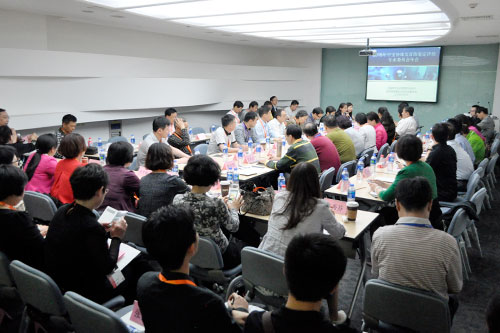
Conference venue
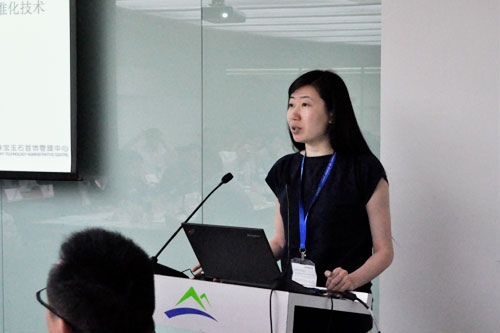
Bao Wei from the National Technical Committee for Standardization of Jewelry and Jadeite delivered a special report on the national standard “Ruby Grading.”
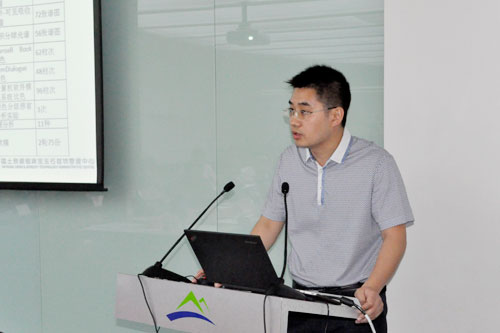
Zhang Jian from the Research Department of the National Inspection Center delivered a special report on the national standard for “Sapphire Grading.”
The meeting was chaired by Meng Lin, Secretary-General of the Professional Committee for Jewelry and Ornament Appraisal and Evaluation of the China Gemstone Association. Bao Wei from the National Technical Committee for Standardization of Gems and Jade and Zhang Jian from the Research Department of the National Inspection Center respectively delivered special reports on the national standards for “Ruby Grading” and “Sapphire Grading,” followed by a Q&A session addressing questions about these two standards. The national standard project for ruby and sapphire grading, developed by the National Gem and Jade Quality Supervision and Inspection Center, began preparations in 2009 and was officially launched in 2010. The standard development team traveled multiple times to Shenzhen, Hong Kong, Bangkok, and other locations to collect samples. Throughout this process, extensive market research and public consultations were conducted, accompanied by numerous analyses and tests. Finally, in 2014, the draft submitted for review was completed. On December 29, 2014, the draft passed the review by the expert panel of the National Technical Committee for Standardization of Gems and Jade, and in March 2015, it was submitted to the leading authority for approval. This standard emphasizes alignment with relevant national and international standards, adopts a grading methodology that combines qualitative assessment with quantitative analysis, and is highly practical and operational. It demonstrates innovation in aspects such as the accuracy of scientific data, framework design, and integration with the market. It not only addresses shortcomings in existing foreign grading systems but also facilitates effective alignment with international standards. Currently, the standard samples are under development, and the plan is to complete their development and submit them for review within this year.
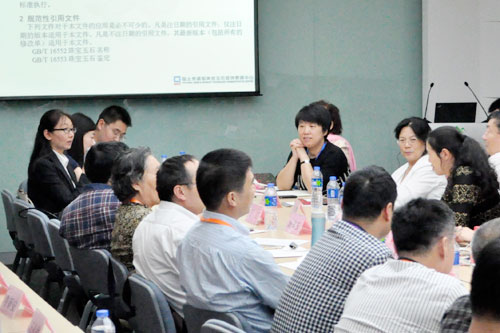
Conference and Seminar Session
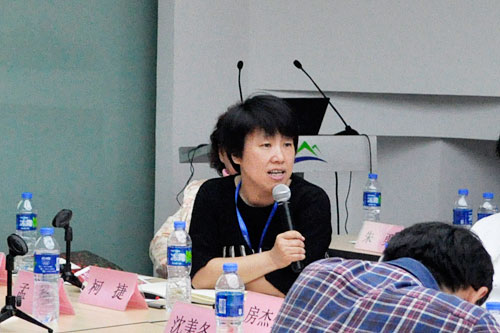
Deputy Director Ke Jie from the Jewelry and Ornament Management Center of the Ministry of Natural Resources delivered a concluding speech.
Finally, Director Ke Jie delivered a concluding speech, thanking the committee members for taking time out of their busy schedules to attend the meeting. He provided further details on the background and development process of the national standard for sapphire and ruby grading, and explained the ongoing revision work on three other national standards—“Names of Jewelry and Jade,” “Identification of Jewelry and Jade,” and “Diamond Grading”—for which applications have already been submitted. He expressed his hope that testing institutions, research institutes, and jewelry enterprises across the country would actively participate and offer specific, reasonable suggestions and comments.
The successful convening of the annual meeting further strengthened communication and exchange in fields such as jewelry quality inspection, scientific research, and education, promoted the revision of standards and technological upgrades, and played a guiding and facilitating role in laying the groundwork for the next phase of work of the Professional Committee on Identification and Evaluation.
Links:
Address: Room 909, 9th Floor, Science & Technology Building, Eastern Software Park, No. 90 Wensan Road, Hangzhou City, Zhejiang Province Telephone:0571-85115488

Scan with your phone
Open the mobile website