
浙江之源资产评估有限责任公司
New Ideas, New Paths, New Actions—A Brief Report on the “Seminar on Building a Mining and Ecological Economy System”
Release time:
2018-10-24
Source:
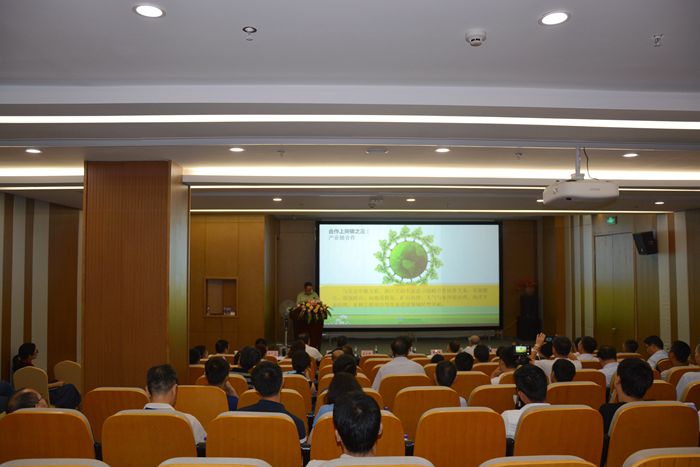
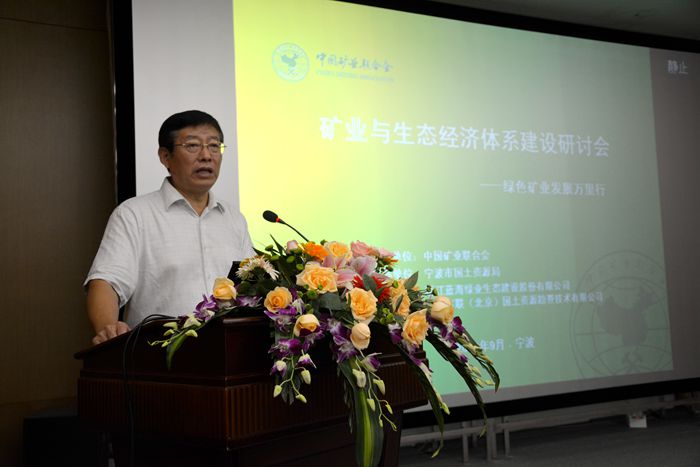
On September 14, the “Seminar on Mining and Ecological Economic System Construction”—the Ten-Thousand-Li Journey for Green Mining Development—was held in Ningbo.
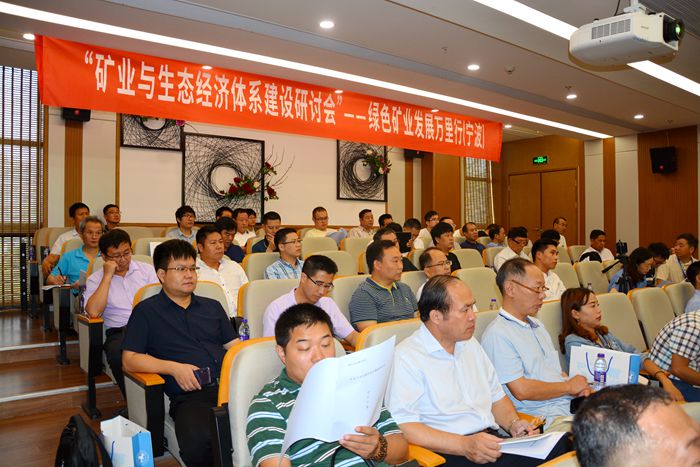
Conference venue
The theme of this seminar is “Mining and the Construction of an Ecological Economic System,” aiming to promote green development in the mining industry and provide effective ideas and pathways for transforming the mining industry’s development strategy. More than 80 representatives from mining enterprises, mining associations, geological exploration units, research institutions, government departments, and other relevant organizations across 20 provinces (municipalities and autonomous regions) nationwide gathered together to jointly explore approaches and measures for implementing “industrial ecologization and ecological industrialization” in the mining sector, and to share practical achievements through observation, learning, and exchange.
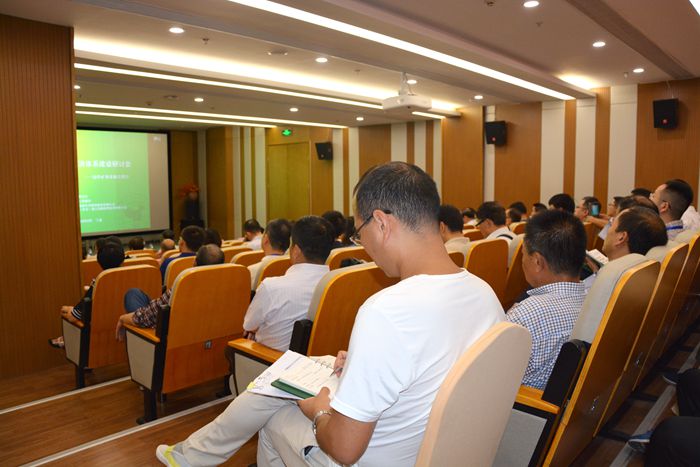
Conference venue
“Today, we’re holding this seminar here to primarily implement the important instructions put forth by General Secretary Xi Jinping on May 19 at the National Conference on Ecological and Environmental Protection—namely, the ‘ecological civilization system and the ecological economic system.’ We’ll also explore pathways for green development in the mining industry and examine how to establish ecological systems for abandoned mines. Furthermore, we’ll listen to the successful experiences shared by the Ningbo Municipal Bureau of Natural Resources and the Zhejiang Blue Ocean Green Industry Group in integrating mine remediation with industrial development and pursuing a path of ecological industrialization. Together, we’ll share new ideas and approaches for green development in the mining sector in the new era.” With these concise and to-the-point opening remarks, Zhang Hua, Director of the Specialized Committee on Mine Restoration and Industrial Integration within the Green Mining Alliance of the China Mining Association, clearly outlined the theme of the meeting and officially announced the launch of the first stop in the “Ten-Thousand-Li Journey for Green Mining Development”—the series of events in Ningbo.
A New Path for Green Development in the Mining Industry
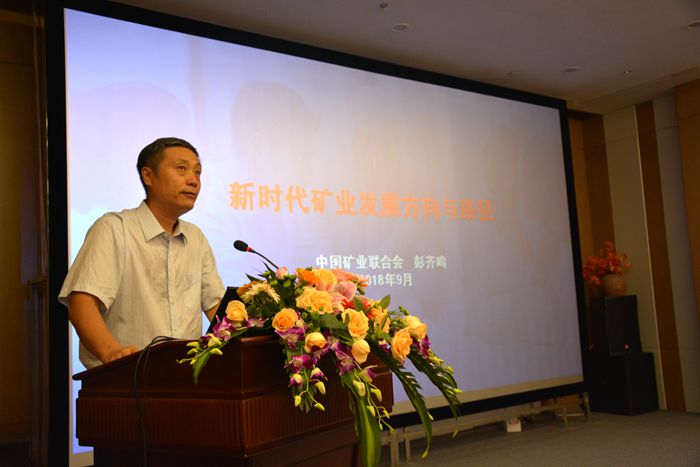
Peng Qiming, Secretary of the Party Committee and President of the China Mining Association, delivered the keynote speech on “The Direction and Path for Green Development of the Mining Industry in the New Era.” Peng Qiming previously served as Director-General of the Department of Science & Technology and International Cooperation, Director-General of the Department of Geological Exploration, and Chief Engineer of the former Ministry of Land and Resources. He has extensive experience in the management of mineral resources, science and technology, and international cooperation.
Peng Qiming outlined the path for green development of the mining industry in the new era from four perspectives: the mining industry’s position in the national economy, the relationship between mining and the ecological environment, the interplay between mining and industrial restructuring, and the international context for mining development. He also offered fresh insights into the future of the mining industry: the mining industry’s role in the national economy is irreplaceable; the old approach to mining development has reached a dead end and must be replaced by a new path; mining requires innovation-driven growth and high-tech support; and both domestic and international environments present limitless opportunities for the mining industry.
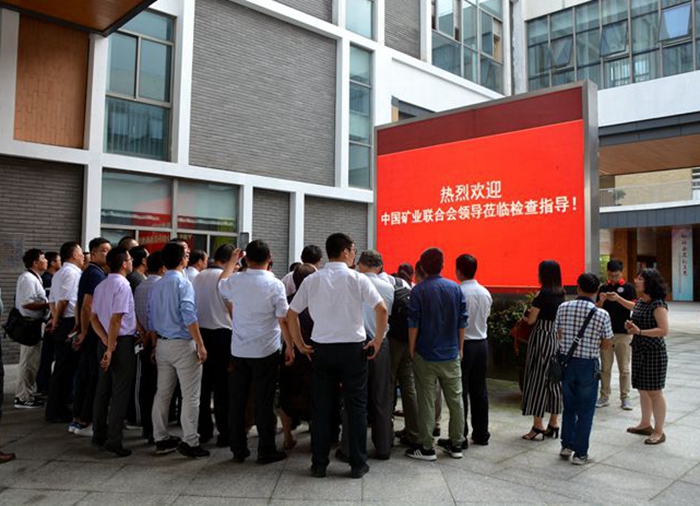
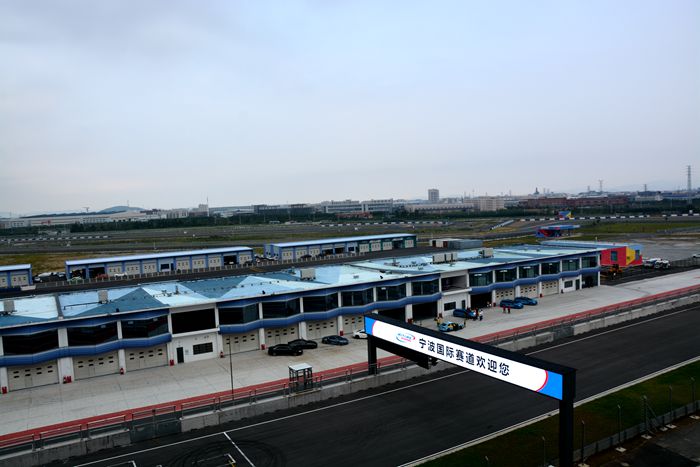
Observation site
Peng Qiming believes that at the National Conference on Ecological and Environmental Protection, General Secretary Xi Jinping first proposed the "Ecological Civilization System," emphasizing the need to build an ecological economic system centered on industrial ecologization and the industrialization of ecology. This provides a clear path for putting into practice the philosophy that "lucid waters and lush mountains are invaluable assets." As a foundational industry of the national economy, how the mining sector across China can put this philosophy into action has become the key to whether the mining industry can achieve sustainable development in the new era. He noted that in recent years, Chinese mining enterprises have made numerous valuable attempts in balancing development with conservation and in managing the relationship between mining and other industries. Their successful experiences in building green mines have effectively rejuvenated this traditional industry, enabling green practices throughout the entire mining process and fostering harmony between humans and nature. Meanwhile, by exploring complementary industries for mining—particularly by repurposing abandoned mining sites to develop new industries—China has laid a solid foundation for reshaping the image of the mining sector and has also pointed the way toward opening up new avenues for the sustainable development of the mining industry.
A New Exploration of Integrated Utilization Models for Mining Areas
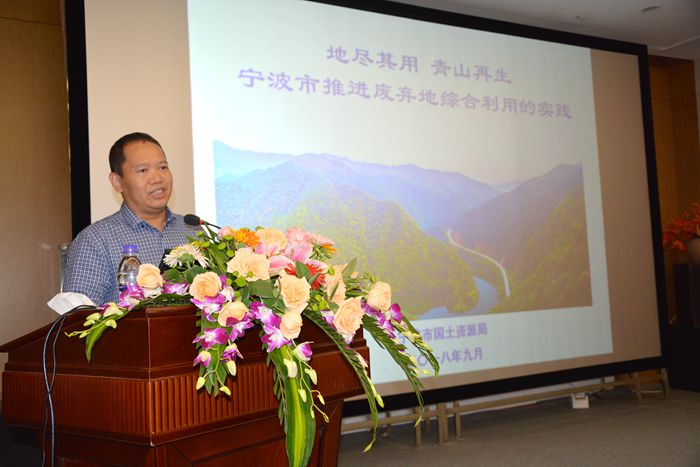
Fan Xianpeng, Deputy Director of the Ningbo Municipal Bureau of Land and Resources, who has many years of experience in managing mineral resources and geological environmental protection, shared at the conference the innovative achievements and lessons learned from Ningbo’s efforts to promote the comprehensive utilization of abandoned land.
Fan Xianpeng said that Ningbo City has leveraged abandoned mine sites by attracting corporate investment to develop cultural and tourism industries, thereby transforming these formerly burdensome mine lands into valuable assets. They started by shifting mindsets and, in accordance with the Ningbo Municipal Government’s “Implementation Opinions on Further Accelerating Ecological Remediation of Abandoned Mines and Promoting the Comprehensive Utilization of Mine Lands,” have stimulated grassroots initiative in four key areas: revitalizing land use, strictly managing rock resources, streamlining administrative procedures, and coordinating financial resources. They have also clearly defined and implemented the three-tiered responsibilities—of the primary entities, regulatory authorities, and the public—in terms of protection, thus fostering a synergistic effort across all levels. They excel at integrating various factors and proactively planning for the “past and future lives” of mine lands. By combining regional planning, distinctive industrial features, and ecological landscapes, they have incorporated mineral resource development into the overall plan for economic and social development. As a result, they have successfully achieved environmental restoration and industrial regeneration, setting a remarkable example of both industrial ecologization and ecological industrialization.
Fan Xianpeng believes that when repurposing abandoned mine sites, “we must think ahead and consider issues from others’ perspectives; the greater the challenges we face, the greater the value we can create. We need to adopt a long-term development mindset and keep future generations in mind…” Only by being pragmatic, taking action, and fostering innovation—and by doing a thorough job of this endeavor—can we expand our development space, balance governance funding, and boost grassroots enthusiasm. By focusing on results through “integrated utilization of abandoned land,” we can achieve a win-win situation that delivers ecological, economic, and social benefits.
Turning waste mines and barren hills into lush green mountains and clear waters.
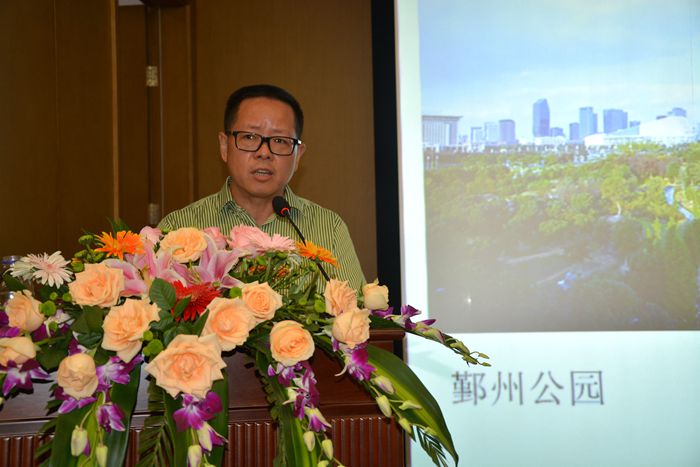
Song Zhaofeng, Chairman of Zhejiang Blue Ocean Green Industry Group, delivered a speech titled “Embracing the Green Mission and Committing to Ecological Transformation” at the conference, drawing on the company’s practical experience and successful case studies.
Since its establishment in 2005, the company has transitioned from a business originally engaged in landscape gardening to a path of ecological industrialization. In the course of developing the green industry—particularly in its involvement in the remediation of abandoned mines—the company has embraced the philosophy that "lucid waters and lush mountains are invaluable assets." It has channeled both its corporate and individual sense of mission and responsibility into one project after another aimed at creating beautiful, green landscapes. Guided by the artisan spirit of "innovation and excellence, specialization and strength," the company has delivered outstanding green projects, thereby contributing to the creation of a better living environment for the people.
Song Zhaofeng introduced that the company has taken “transforming abandoned mines into lush green mountains and clear waters” as the primary direction for its corporate transformation, and has established the core philosophy of “developing ecological industries as the leading sector.” Through years of persistent efforts and innovative development, the company has achieved three major breakthroughs in its understanding: “lucid waters and lush mountains are invaluable assets; it’s better to sell environmental quality than mineral resources; and a sound ecological environment is the region’s competitive edge and productive force.” These breakthroughs have driven transformative changes across three key areas—technological platforms, construction practices, and standards—as well as in platform collaboration, scientific research cooperation, and industrial chain partnerships, all underpinned by the unwavering implementation of three strategic pillars: “specialized management, branded operations, and differentiated competition.”
Reflections and Practices on the Industrialization of Ecological Restoration in Mining Areas
In the process of mine rehabilitation practice, how to achieve ecological industrialization has been a topic that the conference moderator, Zhang Hua, has been researching and pondering for many years.
Zhang Hua offered new insights into the background of Mine Restoration 3.0, the methods for rehabilitating abandoned mines, and practical approaches to ecological industrialization. He also showcased vivid examples illustrating how abandoned and barren (mining) mountains have been successfully transformed into lush green landscapes. He argued that turning abandoned mines into verdant, scenic areas is not only a redemption from the previous model of extensive development but also a process of turning waste into treasure.
In the process of mine reclamation, the first priority should be to focus on industrial positioning rather than on the choice of reclamation methods. Second, we should place great emphasis on the top-level design of the overall plan, aiming to achieve a harmonious integration of industry and nature, as well as between people and the ecosystem. Third, we need to integrate ecological environment, local culture, urban-rural landscapes, and regional advantages into the ecological transformation of industries. On this basis, adopting a “three-integration” model, we can combine mine reclamation with the construction of beautiful countryside; link mine reclamation with the development of new drivers for the local economy; and integrate mine reclamation with the exploration of new blue oceans for economic growth.
The speakers elaborated, from various levels and perspectives, on the dynamics of green development in the mining industry and the construction of green mines; the path to transforming abandoned mine sites—once seen as a burden—into sources of wealth; the market system built on cross-sectoral integration, co-creation, and shared benefits; and environmental regeneration and industrial reconstruction aimed at developing high-quality, diversified ecological products. Their insights resonated deeply with the attendees, highlighting new models and achievements in green mining development for the new era and their potential to drive the growth of emerging industries.
The delegates attending the meeting believe that, in this new era of integrated management of mountains, rivers, forests, farmland, lakes, and grasslands, Ningbo has set an exemplary model for addressing the longstanding challenge of mining land use across China. By repurposing abandoned mines, Ningbo has built schools, reservoirs, parks, and even the world’s only high-altitude plateau racetrack on these once-degraded sites. This approach not only provides a blueprint for other regions nationwide but also offers valuable insights and practical solutions for natural resource management authorities and mining enterprises as they explore policies and regulations for mining land use and strive to achieve coordinated development between the mining industry and other sectors—creating an ecological economic system in the mining sector that fosters mutual support and synergy.
Shen Xiaobo from the Shenyang Geological Survey Center of the China Geological Survey, Ministry of Natural Resources, said: “The city of Ningbo truly has many aspects worth our learning. Ningbo’s entrepreneurs possess commendable strengths. Only by taking a nationwide perspective can we see the gaps—there are things that others have already achieved that we hadn’t even considered, and these are definitely worth our reference and study.”
Shen Qingjie from the Gansu Provincial Bureau of Geological and Mineral Exploration and Development said, “After listening to the experiences shared by various experts and entrepreneurs, I truly felt Ningbo’s prosperity and openness, and my understanding of advanced concepts in mine reclamation has been greatly enhanced.”
Observation site
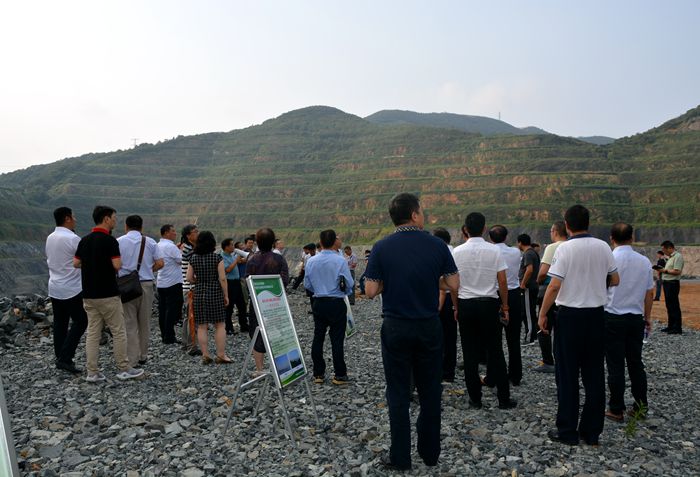
During the conference, delegates also visited three sites—namely, the blasting and backfilling project at the Ganyang Maoyang Mountain construction stone quarry in Ningbo’s Beilun District, the Ningbo Binhai International Cooperative School, and the Ningbo Geely Terrace Racing Track—to observe and learn firsthand about successful cases of comprehensive utilization and redevelopment of abandoned mine sites, transforming these “burdens” into valuable assets and fostering new industries.
According to the organizers, following this seminar, the China Mining Association will also hold a series of seminars across provinces, municipalities, and autonomous regions nationwide on topics such as green exploration, mining culture, and geological heritage conservation.
On September 14, the “Seminar on Mining and Ecological Economic System Construction”—the Ten-Thousand-Li Journey for Green Mining Development—was held in Ningbo.
Conference venue
The theme of this seminar is “Mining and the Construction of an Ecological Economic System,” aiming to promote green development in the mining industry and provide effective ideas and pathways for transforming the mining industry’s development strategy. More than 80 representatives from mining enterprises, mining associations, geological exploration units, research institutions, government departments, and other relevant organizations across 20 provinces (municipalities and autonomous regions) nationwide gathered together to jointly explore approaches and measures for implementing “industrial ecologization and ecological industrialization” in the mining sector, and to share practical achievements through observation, learning, and exchange.
Conference venue
“Today, we’re holding this seminar here to primarily implement the important instructions put forth by General Secretary Xi Jinping on May 19 at the National Conference on Ecological and Environmental Protection—namely, the ‘ecological civilization system and the ecological economic system.’ We’ll also explore pathways for green development in the mining industry and examine how to establish ecological systems for abandoned mines. Furthermore, we’ll listen to the successful experiences shared by the Ningbo Municipal Bureau of Natural Resources and the Zhejiang Blue Ocean Green Industry Group in integrating mine remediation with industrial development and pursuing a path of ecological industrialization. Together, we’ll share new ideas and approaches for green development in the mining sector in the new era.” With these concise and to-the-point opening remarks, Zhang Hua, Director of the Specialized Committee on Mine Restoration and Industrial Integration within the Green Mining Alliance of the China Mining Association, clearly outlined the theme of the meeting and officially announced the launch of the first stop in the “Ten-Thousand-Li Journey for Green Mining Development”—the series of events in Ningbo.
A New Path for Green Development in the Mining Industry
Peng Qiming, Secretary of the Party Committee and President of the China Mining Association, delivered the keynote speech on “The Direction and Path for Green Development of the Mining Industry in the New Era.” Peng Qiming previously served as Director-General of the Department of Science & Technology and International Cooperation, Director-General of the Department of Geological Exploration, and Chief Engineer of the former Ministry of Land and Resources. He has extensive experience in the management of mineral resources, science and technology, and international cooperation.
Peng Qiming outlined the path for green development of the mining industry in the new era from four perspectives: the mining industry’s position in the national economy, the relationship between mining and the ecological environment, the interplay between mining and industrial restructuring, and the international context for mining development. He also offered fresh insights into the future of the mining industry: the mining industry’s role in the national economy is irreplaceable; the old approach to mining development has reached a dead end and must be replaced by a new path; mining requires innovation-driven growth and high-tech support; and both domestic and international environments present limitless opportunities for the mining industry.
Observation site
Peng Qiming believes that at the National Conference on Ecological and Environmental Protection, General Secretary Xi Jinping first proposed the "Ecological Civilization System," emphasizing the need to build an ecological economic system centered on industrial ecologization and the industrialization of ecology. This provides a clear path for putting into practice the philosophy that "lucid waters and lush mountains are invaluable assets." As a foundational industry of the national economy, how the mining sector across China can put this philosophy into action has become the key to whether the mining industry can achieve sustainable development in the new era. He noted that in recent years, Chinese mining enterprises have made numerous valuable attempts in balancing development with conservation and in managing the relationship between mining and other industries. Their successful experiences in building green mines have effectively rejuvenated this traditional industry, enabling green practices throughout the entire mining process and fostering harmony between humans and nature. Meanwhile, by exploring complementary industries for mining—particularly by repurposing abandoned mining sites to develop new industries—China has laid a solid foundation for reshaping the image of the mining sector and has also pointed the way toward opening up new avenues for the sustainable development of the mining industry.
A New Exploration of Integrated Utilization Models for Mining Areas
Fan Xianpeng, Deputy Director of the Ningbo Municipal Bureau of Land and Resources, who has many years of experience in managing mineral resources and geological environmental protection, shared at the conference the innovative achievements and lessons learned from Ningbo’s efforts to promote the comprehensive utilization of abandoned land.
Fan Xianpeng said that Ningbo City has leveraged abandoned mine sites by attracting corporate investment to develop cultural and tourism industries, thereby transforming these formerly burdensome mine lands into valuable assets. They started by shifting mindsets and, in accordance with the Ningbo Municipal Government’s “Implementation Opinions on Further Accelerating Ecological Remediation of Abandoned Mines and Promoting the Comprehensive Utilization of Mine Lands,” have stimulated grassroots initiative in four key areas: revitalizing land use, strictly managing rock resources, streamlining administrative procedures, and coordinating financial resources. They have also clearly defined and implemented the three-tiered responsibilities—of the primary entities, regulatory authorities, and the public—in terms of protection, thus fostering a synergistic effort across all levels. They excel at integrating various factors and proactively planning for the “past and future lives” of mine lands. By combining regional planning, distinctive industrial features, and ecological landscapes, they have incorporated mineral resource development into the overall plan for economic and social development. As a result, they have successfully achieved environmental restoration and industrial regeneration, setting a remarkable example of both industrial ecologization and ecological industrialization.
Fan Xianpeng believes that when repurposing abandoned mine sites, “we must think ahead and consider issues from others’ perspectives; the greater the challenges we face, the greater the value we can create. We need to adopt a long-term development mindset and keep future generations in mind…” Only by being pragmatic, taking action, and fostering innovation—and by doing a thorough job of this endeavor—can we expand our development space, balance governance funding, and boost grassroots enthusiasm. By focusing on results through “integrated utilization of abandoned land,” we can achieve a win-win situation that delivers ecological, economic, and social benefits.
Turning waste mines and barren hills into lush green mountains and clear waters.
Song Zhaofeng, Chairman of Zhejiang Blue Ocean Green Industry Group, delivered a speech titled “Embracing the Green Mission and Committing to Ecological Transformation” at the conference, drawing on the company’s practical experience and successful case studies.
Since its establishment in 2005, the company has transitioned from a business originally engaged in landscape gardening to a path of ecological industrialization. In the course of developing the green industry—particularly in its involvement in the remediation of abandoned mines—the company has embraced the philosophy that "lucid waters and lush mountains are invaluable assets." It has channeled both its corporate and individual sense of mission and responsibility into one project after another aimed at creating beautiful, green landscapes. Guided by the artisan spirit of "innovation and excellence, specialization and strength," the company has delivered outstanding green projects, thereby contributing to the creation of a better living environment for the people.
Song Zhaofeng introduced that the company has taken “transforming abandoned mines into lush green mountains and clear waters” as the primary direction for its corporate transformation, and has established the core philosophy of “developing ecological industries as the leading sector.” Through years of persistent efforts and innovative development, the company has achieved three major breakthroughs in its understanding: “lucid waters and lush mountains are invaluable assets; it’s better to sell environmental quality than mineral resources; and a sound ecological environment is the region’s competitive edge and productive force.” These breakthroughs have driven transformative changes across three key areas—technological platforms, construction practices, and standards—as well as in platform collaboration, scientific research cooperation, and industrial chain partnerships, all underpinned by the unwavering implementation of three strategic pillars: “specialized management, branded operations, and differentiated competition.”
Reflections and Practices on the Industrialization of Ecological Restoration in Mining Areas
In the process of mine rehabilitation practice, how to achieve ecological industrialization has been a topic that the conference moderator, Zhang Hua, has been researching and pondering for many years.
Zhang Hua offered new insights into the background of Mine Restoration 3.0, the methods for rehabilitating abandoned mines, and practical approaches to ecological industrialization. He also showcased vivid examples illustrating how abandoned and barren (mining) mountains have been successfully transformed into lush green landscapes. He argued that turning abandoned mines into verdant, scenic areas is not only a redemption from the previous model of extensive development but also a process of turning waste into treasure.
In the process of mine reclamation, the first priority should be to focus on industrial positioning rather than on the choice of reclamation methods. Second, we should place great emphasis on the top-level design of the overall plan, aiming to achieve a harmonious integration of industry and nature, as well as between people and the ecosystem. Third, we need to integrate ecological environment, local culture, urban-rural landscapes, and regional advantages into the ecological transformation of industries. On this basis, adopting a “three-integration” model, we can combine mine reclamation with the construction of beautiful countryside; link mine reclamation with the development of new drivers for the local economy; and integrate mine reclamation with the exploration of new blue oceans for economic growth.
The speakers elaborated, from various levels and perspectives, on the dynamics of green development in the mining industry and the construction of green mines; the path to transforming abandoned mine sites—once seen as a burden—into sources of wealth; the market system built on cross-sectoral integration, co-creation, and shared benefits; and environmental regeneration and industrial reconstruction aimed at developing high-quality, diversified ecological products. Their insights resonated deeply with the attendees, highlighting new models and achievements in green mining development for the new era and their potential to drive the growth of emerging industries.
The delegates attending the meeting believe that, in this new era of integrated management of mountains, rivers, forests, farmland, lakes, and grasslands, Ningbo has set an exemplary model for addressing the longstanding challenge of mining land use across China. By repurposing abandoned mines, Ningbo has built schools, reservoirs, parks, and even the world’s only high-altitude plateau racetrack on these once-degraded sites. This approach not only provides a blueprint for other regions nationwide but also offers valuable insights and practical solutions for natural resource management authorities and mining enterprises as they explore policies and regulations for mining land use and strive to achieve coordinated development between the mining industry and other sectors—creating an ecological economic system in the mining sector that fosters mutual support and synergy.
Shen Xiaobo from the Shenyang Geological Survey Center of the China Geological Survey, Ministry of Natural Resources, said: “The city of Ningbo truly has many aspects worth our learning. Ningbo’s entrepreneurs possess commendable strengths. Only by taking a nationwide perspective can we see the gaps—there are things that others have already achieved that we hadn’t even considered, and these are definitely worth our reference and study.”
Shen Qingjie from the Gansu Provincial Bureau of Geological and Mineral Exploration and Development said, “After listening to the experiences shared by various experts and entrepreneurs, I truly felt Ningbo’s prosperity and openness, and my understanding of advanced concepts in mine reclamation has been greatly enhanced.”
Observation site
During the conference, delegates also visited three sites—namely, the blasting and backfilling project at the Ganyang Maoyang Mountain construction stone quarry in Ningbo’s Beilun District, the Ningbo Binhai International Cooperative School, and the Ningbo Geely Terrace Racing Track—to observe and learn firsthand about successful cases of comprehensive utilization and redevelopment of abandoned mine sites, transforming these “burdens” into valuable assets and fostering new industries.
According to the organizers, following this seminar, the China Mining Association will also hold a series of seminars across provinces, municipalities, and autonomous regions nationwide on topics such as green exploration, mining culture, and geological heritage conservation.
On September 14, the “Seminar on Mining and Ecological Economic System Construction”—the Ten-Thousand-Li Journey for Green Mining Development—was held in Ningbo.
Conference venue
The theme of this seminar is “Mining and the Construction of an Ecological Economic System,” aiming to promote green development in the mining industry and provide effective ideas and pathways for transforming the mining industry’s development strategy. More than 80 representatives from mining enterprises, mining associations, geological exploration units, research institutions, government departments, and other relevant organizations across 20 provinces (municipalities and autonomous regions) nationwide gathered together to jointly explore approaches and measures for implementing “industrial ecologization and ecological industrialization” in the mining sector, and to share practical achievements through observation, learning, and exchange.
Conference venue
“Today, we’re holding this seminar here to primarily implement the important instructions put forth by General Secretary Xi Jinping on May 19 at the National Conference on Ecological and Environmental Protection—namely, the ‘ecological civilization system and the ecological economic system.’ We’ll also explore pathways for green development in the mining industry and examine how to establish ecological systems for abandoned mines. Furthermore, we’ll listen to the successful experiences shared by the Ningbo Municipal Bureau of Natural Resources and the Zhejiang Blue Ocean Green Industry Group in integrating mine remediation with industrial development and pursuing a path of ecological industrialization. Together, we’ll share new ideas and approaches for green development in the mining sector in the new era.” With these concise and to-the-point opening remarks, Zhang Hua, Director of the Specialized Committee on Mine Restoration and Industrial Integration within the Green Mining Alliance of the China Mining Association, clearly outlined the theme of the meeting and officially announced the launch of the first stop in the “Ten-Thousand-Li Journey for Green Mining Development”—the series of events in Ningbo.
A New Path for Green Development in the Mining Industry
Peng Qiming, Secretary of the Party Committee and President of the China Mining Association, delivered the keynote speech on “The Direction and Path for Green Development of the Mining Industry in the New Era.” Peng Qiming previously served as Director-General of the Department of Science & Technology and International Cooperation, Director-General of the Department of Geological Exploration, and Chief Engineer of the former Ministry of Land and Resources. He has extensive experience in the management of mineral resources, science and technology, and international cooperation.
Peng Qiming outlined the path for green development of the mining industry in the new era from four perspectives: the mining industry’s position in the national economy, the relationship between mining and the ecological environment, the interplay between mining and industrial restructuring, and the international context for mining development. He also offered fresh insights into the future of the mining industry: the mining industry’s role in the national economy is irreplaceable; the old approach to mining development has reached a dead end and must be replaced by a new path; mining requires innovation-driven growth and high-tech support; and both domestic and international environments present limitless opportunities for the mining industry.
Peng Qiming believes that at the National Conference on Ecological and Environmental Protection, General Secretary Xi Jinping first proposed the "Ecological Civilization System," emphasizing the need to build an ecological economic system centered on industrial ecologization and the industrialization of ecology. This provides a clear path for putting into practice the philosophy that "lucid waters and lush mountains are invaluable assets." As a foundational industry of the national economy, how the mining sector across China can put this philosophy into action has become the key to whether the mining industry can achieve sustainable development in the new era. He noted that in recent years, Chinese mining enterprises have made numerous valuable attempts in balancing development with conservation and in managing the relationship between mining and other industries. Their successful experiences in building green mines have effectively rejuvenated this traditional industry, enabling green practices throughout the entire mining process and fostering harmony between humans and nature. Meanwhile, by exploring complementary industries for mining—particularly by repurposing abandoned mining sites to develop new industries—China has laid a solid foundation for reshaping the image of the mining sector and has also pointed the way toward opening up new avenues for the sustainable development of the mining industry.
A New Exploration of Integrated Utilization Models for Mining Areas
Fan Xianpeng, Deputy Director of the Ningbo Municipal Bureau of Land and Resources, who has many years of experience in managing mineral resources and geological environmental protection, shared at the conference the innovative achievements and lessons learned from Ningbo’s efforts to promote the comprehensive utilization of abandoned land.
Fan Xianpeng said that Ningbo City has leveraged abandoned mine sites by attracting corporate investment to develop cultural and tourism industries, thereby transforming these formerly burdensome mine lands into valuable assets. They started by shifting mindsets and, in accordance with the Ningbo Municipal Government’s “Implementation Opinions on Further Accelerating Ecological Remediation of Abandoned Mines and Promoting the Comprehensive Utilization of Mine Lands,” have stimulated grassroots initiative in four key areas: revitalizing land use, strictly managing rock resources, streamlining administrative procedures, and coordinating financial resources. They have also clearly defined and implemented the three-tiered responsibilities—of the primary entities, regulatory authorities, and the public—in terms of protection, thus fostering a synergistic effort across all levels. They excel at integrating various factors and proactively planning for the “past and future lives” of mine lands. By combining regional planning, distinctive industrial features, and ecological landscapes, they have incorporated mineral resource development into the overall plan for economic and social development. As a result, they have successfully achieved environmental restoration and industrial regeneration, setting a remarkable example of both industrial ecologization and ecological industrialization.
Fan Xianpeng believes that when repurposing abandoned mine sites, “we must think ahead and consider issues from others’ perspectives; the greater the challenges we face, the greater the value we can create. We need to adopt a long-term development mindset and keep future generations in mind…” Only by being pragmatic, taking action, and fostering innovation—and by doing a thorough job of this endeavor—can we expand our development space, balance governance funding, and boost grassroots enthusiasm. By focusing on results through “integrated utilization of abandoned land,” we can achieve a win-win situation that delivers ecological, economic, and social benefits.
Turning waste mines and barren hills into lush green mountains and clear waters.
Song Zhaofeng, Chairman of Zhejiang Blue Ocean Green Industry Group, delivered a speech titled “Embracing the Green Mission and Committing to Ecological Transformation” at the conference, drawing on the company’s practical experience and successful case studies.
Since its establishment in 2005, the company has transitioned from a business originally engaged in landscape gardening to a path of ecological industrialization. In the course of developing the green industry—particularly in its involvement in the remediation of abandoned mines—the company has embraced the philosophy that "lucid waters and lush mountains are invaluable assets." It has channeled both its corporate and individual sense of mission and responsibility into one project after another aimed at creating beautiful, green landscapes. Guided by the artisan spirit of "innovation and excellence, specialization and strength," the company has delivered outstanding green projects, thereby contributing to the creation of a better living environment for the people.
Song Zhaofeng introduced that the company has taken “transforming abandoned mines into lush green mountains and clear waters” as the primary direction for its corporate transformation, and has established the core philosophy of “developing ecological industries as the leading sector.” Through years of persistent efforts and innovative development, the company has achieved three major breakthroughs in its understanding: “lucid waters and lush mountains are invaluable assets; it’s better to sell environmental quality than mineral resources; and a sound ecological environment is the region’s competitive edge and productive force.” These breakthroughs have driven transformative changes across three key areas—technological platforms, construction practices, and standards—as well as in platform collaboration, scientific research cooperation, and industrial chain partnerships, all underpinned by the unwavering implementation of three strategic pillars: “specialized management, branded operations, and differentiated competition.”
Reflections and Practices on the Industrialization of Ecological Restoration in Mining Areas
In the process of mine rehabilitation practice, how to achieve ecological industrialization has been a topic that the conference moderator, Zhang Hua, has been researching and pondering for many years.
Zhang Hua offered new insights into the background of Mine Restoration 3.0, the methods for rehabilitating abandoned mines, and practical approaches to ecological industrialization. He also showcased vivid examples illustrating how abandoned and barren (mining) mountains have been successfully transformed into lush green landscapes. He argued that turning abandoned mines into verdant, scenic areas is not only a redemption from the previous model of extensive development but also a process of turning waste into treasure.
In the process of mine reclamation, the first priority should be to focus on industrial positioning rather than on the choice of reclamation methods. Second, we should place great emphasis on the top-level design of the overall plan, aiming to achieve a harmonious integration of industry and nature, as well as between people and the ecosystem. Third, we need to integrate ecological environment, local culture, urban-rural landscapes, and regional advantages into the ecological transformation of industries. On this basis, adopting a “three-integration” model, we can combine mine reclamation with the construction of beautiful countryside; link mine reclamation with the development of new drivers for the local economy; and integrate mine reclamation with the exploration of new blue oceans for economic growth.
The speakers elaborated, from various levels and perspectives, on the dynamics of green development in the mining industry and the construction of green mines; the path to transforming abandoned mine sites—once seen as a burden—into sources of wealth; the market system built on cross-sectoral integration, co-creation, and shared benefits; and environmental regeneration and industrial reconstruction aimed at developing high-quality, diversified ecological products. Their insights resonated deeply with the attendees, highlighting new models and achievements in green mining development for the new era and their potential to drive the growth of emerging industries.
Links:
Address: Room 909, 9th Floor, Science & Technology Building, Eastern Software Park, No. 90 Wensan Road, Hangzhou City, Zhejiang Province Telephone:0571-85115488

Scan with your phone
Open the mobile website