
浙江之源资产评估有限责任公司
With the trade war escalating, what is the current situation facing the mining market?
Release time:
2018-04-17
Source:
On April 6, Beijing time, U.S. President Trump said he had instructed the Office of the United States Trade Representative to study whether to impose additional tariffs on $100 billion worth of Chinese exports. Shortly afterward, China’s Ministry of Commerce stated that if the U.S. side announces the $100-billion plan, China will, without hesitation, immediately launch a strong and decisive countermeasure. As a result, the U.S.-China trade conflict has taken on a rapidly escalating trajectory.
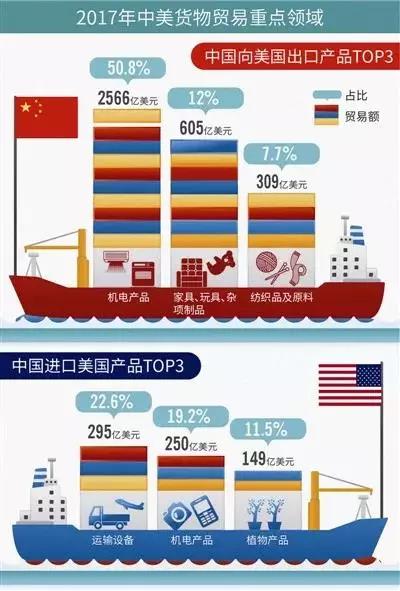
As the world’s two largest economies engage in a sharp confrontation, the mining markets of both countries are also being affected. What impacts will mineral products and mining markets face?
Current Status of Mineral Products
Copper
Short-term impact, long-term market outlook.
In the copper market, in 2017, copper accounted for 15% of China's exports of mechanical and electrical products in air conditioners, 7% in electronics, and 10% in transportation. Copper prices have already been hit in the short term; early on the 23rd, LME copper fell by 1.52%, and on the 24th, LME copper fell by 1.15%. As of the close on the 24th, the LME closing price was $6,649 per tonne.
According to the agency’s forecast, global copper demand will maintain steady growth in 2018. Outside China, the growth rate is expected to accelerate. However, domestic demand will likely slow down compared to 2017, influenced by factors such as the downturn in the real estate sector and trade tensions. Future copper price movements will continue to depend on fundamental factors, and it is crucial to pay close attention to upstream supply conditions, including disruptions at mining sites and the availability of scrap copper.
Looking at the supply side in 2018, the threat of mine strikes remains, particularly as several copper mines in Chile and Peru are facing labor-management negotiations. Should concentrated strikes occur again in 2018, this would further heighten expectations of tight raw material supplies. Another significant factor is China's supply of scrap copper. Changes in China's scrap copper policies not only affect market supply but, more importantly, capital speculation can amplify market effects.
Therefore, in the short term, copper prices will likely experience low-level fluctuations influenced by trade tensions. In the medium to long term, however, as market sentiment regarding upstream supply changes, prices could rebound to a more reasonable range.
Cobalt lithium
Minimal impact,
The “Cobalt Cow” model continues.
Regarding cobalt and lithium, the U.S. trade war is not expected to have a major impact on the new-energy cobalt and lithium industry. Currently, metal prices have not been significantly affected. However, due to the panic triggered by the market, capital has sharply withdrawn from the capital markets, causing a substantial drop in related mining stocks. Leading stocks such as Huayou Cobalt, Luoyang Molybdenum, Hanrui Cobalt, Ganfeng Lithium, and Tianqi Lithium have all hit their daily limit-downs.
Regarding cobalt prices, since the beginning of 2018, the market has continued its “cobalt bull” trend, with numerous positive factors emerging one after another.
First, raw material costs are rising. The recent announcement of a new mining law in the Democratic Republic of the Congo has become a focal point of attention within the industry. If the new mining law is implemented smoothly, China’s import costs for raw materials will increase.
Second, demand is growing. New-energy vehicles have become the primary driver of cobalt demand growth, and industries such as 3C devices, superalloys, and cemented carbides are also experiencing widespread improvement.
Moreover, the market anticipates a tight supply situation. Downstream 3C and automotive giants such as Apple, BMW, and Volkswagen are eager to sign long-term contracts directly with upstream companies for cobalt raw materials, further exacerbating supply constraints and fueling expectations of rising prices.
In addition, sellers are reluctant to sell, and capital is driving the market. The continued bullish optimism among financial and investment institutions as well as traders is prompting hoarders to keep their stocks held back.
The current decline in the stock prices of leading companies in the stock market does not indicate a weakening of the industry. On the contrary, market expectations for cobalt and lithium remain strong, and the profitability of related companies is still expected to stay at relatively high levels. Once market panic subsides, these companies will once again become highly sought after by capital markets.
Nickel
High impact,
Overall demand remains relatively optimistic.
In the nickel market, as stainless steel—the primary downstream application of nickel—has seen continuous growth in China’s production over recent years, and its export volume has also been steadily increasing, trade tensions involving stainless steel products between China and other countries have gradually intensified. Although exports of stainless steel products to the U.S. and other countries have declined year by year, given the current global oversupply of stainless steel, the ongoing trade war will further weigh on stainless steel exports and exacerbate the oversupply situation in the domestic stainless steel market, significantly impacting demand for nickel. As a result, up to now, nickel has experienced a larger price decline compared to other metal varieties. Early morning on the 23rd, LME nickel fell by 2.55%, and on the 24th, LME nickel dropped by 1.67%. Meanwhile, the domestic stainless steel futures market even hit the daily limit down at one point.
Although significant production cuts are expected in the short term, overall demand for stainless steel in 2018 remains highly optimistic. Despite the continuous increase in NPI production, it is proving difficult to boost global output of other nickel products. Macquarie has revised its 2018 global nickel supply-and-demand forecast, raising the projected deficit from 75,000–80,000 tons to 95,000 tons. The firm also emphasized that although the volume of nickel used in power batteries remains relatively small, the automotive industry’s willingness to lock in future nickel supply at low prices will push nickel prices higher. Antaike has offered a similar forecast, noting that from a fundamental perspective, the global nickel market’s supply-and-demand gap is set to widen further in 2018. Therefore, we anticipate that after nickel prices fall to a reasonably sustainable level under current market conditions, there will still be considerable room for a substantial rebound in the future.
Industry Status
The steel industry—operating under the radar, no need to worry.
Due to the U.S.’s ongoing “double anti-dumping and countervailing” measures against China’s steel and steel product exports, the share of Chinese steel exported to the U.S. has remained relatively low in recent years. In 2017, the U.S. imported a total of 35.93 million tons of steel, of which 784,000 tons were from China—placing China at 11th position and accounting for only 2.2% of the U.S.’s total steel imports. In recent years, China’s steel exports have taken a “stealthy” route: first exporting to Southeast Asia, then indirectly re-exporting to the U.S., or exporting to South Korea for further processing before being re-exported to the U.S. The total volume of these indirectly exported steels has even exceeded the volume of direct exports to the U.S. At present, China’s spot market remains primarily domestic-oriented, with export volumes so low as to be virtually negligible. Domestic demand in China remains robust, so there is no need for excessive concern. Overall, China’s economic situation remains favorable, and domestic demand continues to be strong.
New energy industry—limited impact
In 2017, China’s exports of new-energy vehicles showed remarkable performance, reaching a volume of 106,000 units, with motor vehicles accounting for 10.01% of the total export share. The value of China’s new-energy vehicle exports in 2017 reached 327 million U.S. dollars. By country of export, in 2017, China exported 214 pure electric passenger vehicles to the United States, totaling 1.65 million U.S. dollars; and 1,042 plug-in hybrid passenger vehicles to the U.S., worth 61.15 million U.S. dollars. Among all countries to which China exported, the U.S. ranked first.
The strategic steps taken by some Chinese domestic brands to enter the U.S. market could be affected. However, the U.S. is not a major export destination for China’s new-energy vehicles, and since these domestic brands do not rely on U.S. technology or components, the impact on sales would be minimal. On the contrary, if U.S.-based brands like Tesla were to enter China, they might face hefty tariffs. As early as during the “double anti-dumping” measures, certain models of U.S.-made cars were already significantly impacted. If the U.S. escalates its trade war to such an intense level, the automotive industry will undoubtedly feel the ripple effects. Back in 2011, the Ministry of Commerce announced the imposition of anti-dumping and countervailing duties on certain large-displacement imported vehicles originating from the U.S., affecting companies including General Motors, Chrysler, as well as U.S. firms such as Mercedes-Benz, BMW, and Honda.
The global oil and gas industry—weighed down, has been steadily declining.
For the oil and gas industry, steel is indispensable throughout the entire petroleum supply chain—from pipelines and platforms to oil rigs and processing equipment. In the U.S., steel imports for oil and gas pipelines account for three-quarters of the total steel used in construction projects. The U.S. imposition of additional tariffs on Chinese goods could very likely disrupt investment in new liquefied natural gas (LNG) projects. LNG projects have always been capital-intensive, typically requiring buyers to make long-term commitments at fixed prices in order to provide developers with financial certainty. Without such assurance, developers might be reluctant to give the green light to LNG terminal projects. The trade war could drag down the global economy. Although geopolitical tensions pushed oil prices higher last week, as the U.S. and China engage in a trade showdown, stock markets have plummeted, and energy stocks have also suffered sharp declines. Currently, the market has begun to speculate that Trump’s trade war is not good news for global economic growth. As a result, oil prices are likely to be weighed down and continue to fall.
As the China-U.S. trade friction intensifies, it will exert some negative impact on short-term market sentiment and risk appetite in the mining sector. The specific extent of the medium- and long-term effects will depend on the breadth and depth of the ensuing trade war. Regardless of the eventual outcome of the trade war, one thing is certain: China will unswervingly push ahead with a new round of reform and opening-up, further strengthening its cooperation with the European Union, Asia, Africa, and other countries and regions, continuing to develop the Belt and Road Initiative, and steadily expanding China’s influence while seeking broader support. It is foreseeable that in the future, investment in the mining market will increasingly focus on areas along the Belt and Road.
Links:
Address: Room 909, 9th Floor, Science & Technology Building, Eastern Software Park, No. 90 Wensan Road, Hangzhou City, Zhejiang Province Telephone:0571-85115488

Scan with your phone
Open the mobile website