
浙江之源资产评估有限责任公司
The Top Ten Chinese Cities Rich in National Treasure-Level Minerals—each one is a strategic hub for national mineral resources!
Release time:
2018-01-03
Source:
China is vast and rich in natural resources, with many mineral resources ranking first in the world. For example, in terms of rare earth elements, China accounts for approximately 43% of the world’s total reserves, and most of China’s rare earths come from Baotou; located in Lanping, Yunnan.
Lead Zinc With the nation’s largest and the world’s second-largest mineral reserves, Lanping has earned the nickname “Zinc Capital”; in addition, there is... Tin All, Nickel All, Molybdenum It’s a region renowned for its abundant mineral resources.
Let’s take a look at which cities are the “mining capitals” of these strategic mineral resources:
1. Tungsten Capital: Dayu, Jiangxi
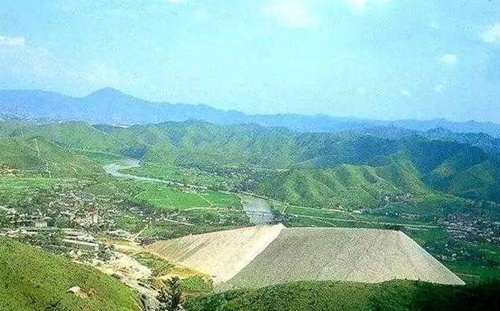
Dayu County is located in the southern part of Jiangxi Province, upstream of the Zhangshui River, the western source of the Ganjiang River. Dayu County is extremely rich in tungsten mineral resources and is famously known as the "Tungsten Capital." It is China's largest tungsten mining base.
Usage:
Tungsten, with its high-temperature resistance and wide range of applications, is a steel. Iron Tungsten is an important raw material for the electrical, chemical, and defense industries. Particularly in recent years, tungsten has increasingly demonstrated its crucial role in cutting-edge technological fields. China is the country with the largest reserves and production of tungsten, earning it the nickname “the Kingdom of Tungsten.”
According to data from 1977, China ranks first in the world's tungsten reserves, accounting for approximately 53.6%.
2. Tin Capital: Gejiu, Yunnan
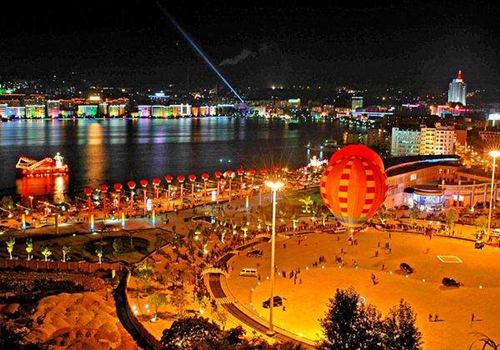
Gejiu, located in the southwestern frontier of the motherland, is renowned as the "Tin Capital" due to its long history of tin mining, abundant reserves, advanced smelting technology, and high purity of refined tin.
Since the founding of New China, cumulative production of non-ferrous metals has reached... Gold It covers an area of 1.92 million tons, including 920,000 tons of tin, accounting for over 70% of the nation's total tin production. It is the country's largest modernized base for tin production and processing.
Usage:
Tinplate is the primary consumer of tin, accounting for about 40% of total tin consumption. It is used, among other things, as containers for food and beverages. In the chemical industry, tin is mainly used to produce tin compounds and chemical reagents.
Organic compounds of tin are primarily used as wood preservatives and pesticides, while inorganic compounds of tin are mainly employed as catalysts, stabilizers, additives, and emulsifiers in the ceramics industry.
3. Zinc Capital: Lanping, Yunnan
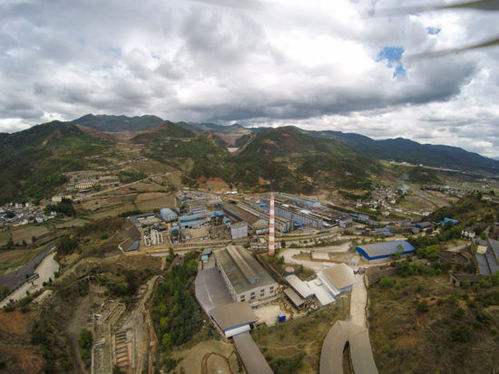
Lanping boasts exceptionally rich mineral resources that have long been renowned both at home and abroad. Currently, the confirmed and discovered mineral deposits include lead and zinc. Copper 、 Silver salt, Strontium 、 Mercury 、 Antimony sulfur, iron, Gypsum 、 Mica — Pyrophyllite, Iceland spar 、 Crystal More than ten types of minerals, including stone, and over 150 mineral deposit sites.
Among them, the Jinding Fenghuangshan super-large lead-zinc deposit ranks first in China and second in the world thanks to its large reserves, high grade, concentrated mineralization, and ease of mining. Its reserves amount to 14.29 million metric tons of metal, with a potential value exceeding 200 billion yuan.
Usage:
Zinc boasts excellent ductility, corrosion resistance, and wear resistance. It is the third most important nonferrous metal among the ten commonly used nonferrous metals. Currently, in terms of consumption of nonferrous metals, zinc ranks second only to copper. Aluminum widely used in nonferrous metals, metallurgy, building materials, light industry, electromechanical engineering, chemical industry, automotive, and military industries. Coal Charcoal and Petroleum and other industries and sectors.
4. Nickel Capital: Jinchang, Gansu
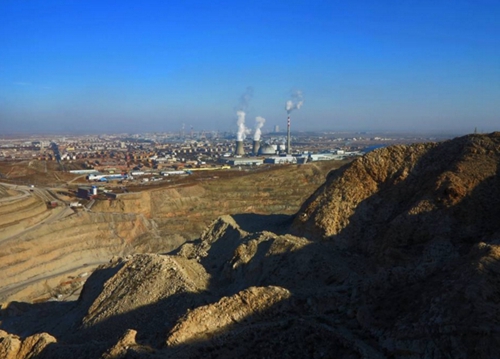
The Jinchang nickel mine is located north of Yongchang County in the Hexi Corridor of Gansu Province. The Longshoushan deposit is a rare global occurrence—a polymetallic sulfide deposit dominated by nickel, rich in both nickel sulfides and copper. Cobalt gold, silver, and Platinum Group metal.
After the Jinchang nickel mine began operations in the 1960s, China ended its history of not producing nickel, propelling the country to become one of the world’s largest holders of nickel resources.
Cash Chang has become China’s largest nickel production base and a hub for the refining of copper, cobalt, gold, silver, and platinum-group metals, earning it the nickname “China’s Nickel Capital.”
5. Antimony Capital: Lengshuijiang, Hunan Province

At the end of the Ming Dynasty (1541), the world’s largest antimony ore deposit—the Xikeng Mine in Hunan—was discovered. In 1908, the Hunan Huachang Company introduced the volatile roasting process from France and began using this method to smelt antimony.
With the rise of the machinery manufacturing industry, the uses and demand for antimony have expanded. Following the development of tin mines, antimony deposits in Panxi, Taojiang in Hunan, Longshan in Xinshao, and Woxi in Taoyuan have been successively developed.
Subsequently, provinces and regions such as Guizhou, Yunnan, and Guangxi also began mining antimony ores one after another. For several decades following 1908, China’s antimony production consistently accounted for more than 50% of the world’s total output. Specifically, from 1912 to 1935 alone, the antimony output from tin mines represented 36.6% of the global output and 60.9% of the nation’s total output.
Usage:
The primary function of antimony in alloys is to increase hardness; it is often referred to as a hardening agent for metals or alloys. Antimony and antimony compounds were first used in wear-resistant alloys, type-metal alloys for printing, and the arms industry.
With the advancement of science and technology, it is now widely used in the production of various products for sectors including flame retardants, enamels, glass, rubber, coatings, pigments, ceramics, plastics, semiconductor components, fireworks, pharmaceuticals, and chemical industry.
6. Molybdenum Capital: Luanchuan County, Henan Province

China is rich in molybdenum mineral resources. As of the end of 1999, China’s total reserves of molybdenum metal amounted to 8.336 million tons, ranking second in the world. China’s annual production of metallic molybdenum is nearly 30,000 tons, also placing it second globally.
There are 222 molybdenum mining sites, distributed across 28 provinces (autonomous regions and municipalities). The main molybdenum mining areas include Dahuishan in Jilin Province; Yangjiaozhangzi and Lanjiagou in Liaoning Province; Jinduicheng in Shaanxi Province; and Luanchuan in Henan Province. Henan Province boasts the richest molybdenum resources, with its molybdenum reserves accounting for 30.1% of the nation's total reserves.
Usage:
Pure molybdenum wire is used in high-temperature electric furnaces, electrical discharge machining, and wire-cutting processes. Molybdenum sheets are employed in the manufacture of radio equipment and X-ray devices. Due to its excellent resistance to high-temperature ablation, molybdenum is primarily used in the production of gun barrels, rocket nozzles, and tungsten filament supports for light bulbs. Adding molybdenum to alloy steels can enhance the elastic limit, improve corrosion resistance, and help maintain permanent magnetism.
7. Coking Coal: Qitaihe, Heilongjiang Province
Links:
Address: Room 909, 9th Floor, Science & Technology Building, Eastern Software Park, No. 90 Wensan Road, Hangzhou City, Zhejiang Province Telephone:0571-85115488

Scan with your phone
Open the mobile website