
浙江之源资产评估有限责任公司
China’s scrap tungsten market has great potential.
Release time:
2018-02-02
Source:
zhenghua 2018.1.16
With the advancement of supply-side reform and intensified environmental protection efforts, the prices of nonferrous metals—including tungsten and copper—have surged, and the market is brimming with optimism about future prospects. Industry analysts indicate that while primary metals may not see significant price movements in 2018, secondary metals—recycled metals—hold considerable promise. Meanwhile, data from the China Tungsten Industry Association also point to the substantial potential of China’s scrap tungsten market in 2018.
According to statistics from the China Nonferrous Metals Industry Association, in the first three quarters of this year, 8,244 large-scale nonferrous metal enterprises achieved main business revenues of 4,405.2 billion yuan, an increase of 17.3% year-on-year; and total profits reached 173.02 billion yuan, up 50.9% year-on-year. Among them, according to statistics from the China Tungsten Industry Association, 123 enterprises recorded main business revenues of 48.129 billion yuan in the first three quarters, representing a year-on-year increase of 25.26%; they generated total profits and taxes of 4.288 billion yuan, up 109.49% year-on-year; and realized profits of 2.153 billion yuan, an increase of 362.23% year-on-year.
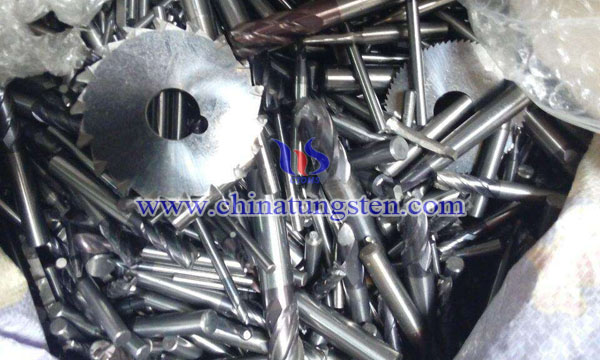
Analysts believe that compared to 2016, when both demand and policy played a dual role in driving the industry forward, last year’s sustained improvement was largely attributable to policy factors, while downstream demand growth remained relatively moderate. Consequently, compared to the primary metals market, the recycled metals market looks more promising this year. For tungsten products, secondary resources—including waste cemented carbides, tungsten-based high-density alloys, tungsten materials, grinding wastes, smelting slag containing tungsten, and tungsten-bearing tailings—hold significant potential for future development through recycling and reuse.
China’s utilization of secondary tungsten resources is developing rapidly. In 2008, including imported scrap tungsten, the amount of recycled tungsten reached 10,000 tons, and it is projected to grow at an average annual rate of 3% in the future. Currently, the nationwide recycling and reuse of scrap tungsten are mainly concentrated in 12 counties (or cities) across 8 provinces, involving more than 100 enterprises with an annual processing capacity approaching 40,000 tons.
According to data from the International Tungsten Association, among the tungsten consumed during tungsten production and processing, 66% by weight of tungsten metal comes from primary tungsten ores, while 34% is derived from the recycling of used tungsten products and tungsten waste (of which 24% originates from recycled used products and 10% from waste generated during the production process). Put another way, after smelting and processing, 90% of tungsten raw materials are transformed into final tungsten products, and 10% of the waste generated during the production process can be recycled. However, after these products reach their end-of-life applications, 66% of the tungsten products are permanently lost and cannot be recovered or reused, whereas only 34% of used tungsten products can be regenerated and reused. Currently, China recycles about 20% of its spent tungsten, leaving considerable room for further improvement.
Previous page
Links:
Address: Room 909, 9th Floor, Science & Technology Building, Eastern Software Park, No. 90 Wensan Road, Hangzhou City, Zhejiang Province Telephone:0571-85115488

Scan with your phone
Open the mobile website