
浙江之源资产评估有限责任公司
A New Direction for Jade Investment: The Value of Jin Si Yu Is Becoming Increasingly Prominent
Release time:
2018-05-15
Source:
Jewelry is about to explode 2018-04-24
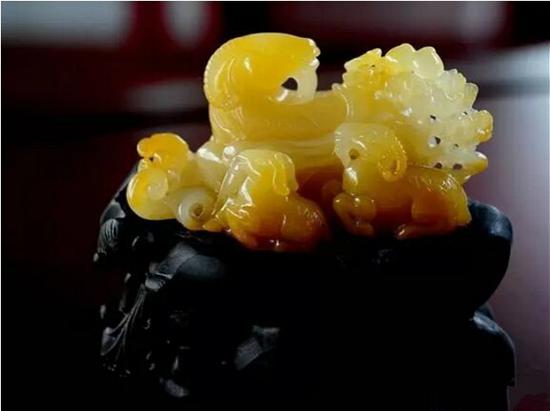
From 2015 to 2017, as the markets for jadeite and white jade cooled down, a large number of new varieties of jade—such as nanhong, jinsiyu, and Alashan jade—emerged. Rather than saying these new varieties appeared simply because of market trends, it’s more accurate to say that people’s understanding and perception of new things have been updated and evolved.

People have noticed that recently, art pieces made from new jade varieties have been appearing more and more frequently in various jade-carving competitions. There has been extensive media coverage on the “golden silk jade” market, and a simple search for keywords such as “golden silk jade” on search engines yields over 3.6 million relevant results. Articles like “Golden Silk Jade Enters the United Nations Headquarters,” “Xinjiang Golden Silk Jade Makes Its Way into the World’s Art Sanctuary—the Louvre,” and “China’s Treasured Gem: The Splendor of Yardang” have seen a dramatic surge in readership. Since its value was first recognized—born amid the desolate, uninhabited deserts and Gobi regions—golden silk jade has captured the attention of the jade community.
At the Hualing Market in Urumqi, Xinjiang, Hotan jade once dominated the entire market. However, over the past two years, affected by the broader economic environment, the jade market has been mired in a deep winter. Yet, against this backdrop, sales of Jin Si jade have bucked the trend, with many Hotan jade merchants shifting their focus to Jin Si jade and recognizing its promising potential for future appreciation—a newly emerging jade variety that is just beginning to gain traction.
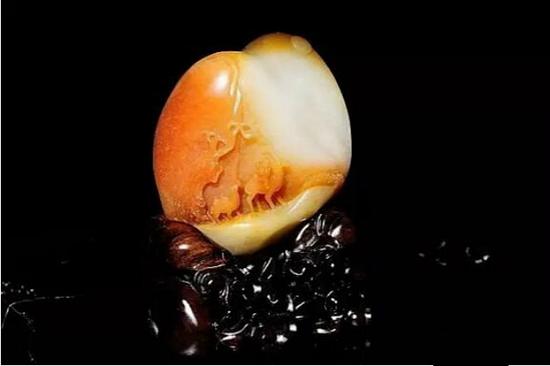
After several years of market downturn, the fervor that once characterized the traditional jade, jadeite, and white-jade markets has subsided. Coupled with the waning demand from official circles, the jade market is now shifting toward rationality and caution. The discovery of new jade varieties has injected fresh vitality into the market, and an increasing number of individualistic consumers are emerging. Moreover, the vibrant colors of Jin Si Jade have caught the attention of younger consumers, leaving many merchants facing losses.
The reshuffling of the jade industry has already begun, with a large number of jade shops in Guangzhou, Jieyang, and Sihui closing down. Faced with this situation, many merchants are starting to pay attention to new types of jade. These new jade varieties are priced more realistically—both in terms of upstream raw material costs and supplier pricing for manufactured products. As a result, retailers are being remarkably pragmatic under the current market conditions. Since these new jade varieties don't carry the same high risk of price drops due to excessive stockpiling as emerald or white jade do, retailers can afford to be more flexible. Moreover, before these new jade varieties gained widespread attention, their raw material prices were exceptionally low.
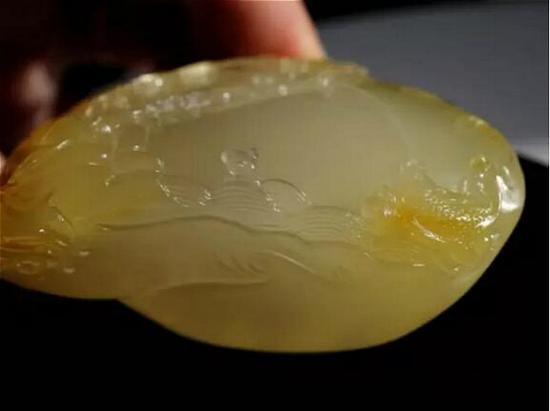
Moreover, the raw materials for the new jade varieties are straightforward in price and come in a wide array of vibrant colors. As a result, during the processing stage, jade carving studios can acquire materials and bear lower creation costs, allowing jade carvers to unleash their creativity and produce works that stay in step with current trends. In contrast, high-end raw materials such as white jade and jadeite are treated with greater caution—first, because the market for traditional motifs is nearing saturation, and second, because it’s difficult to sell high-end pieces once they’re crafted; thus, artisans can only wait for the market to recover or for clients to place custom orders.
Although the overall jade market is sluggish, materials from the Gobi Desert—such as Jin Si Yu and Alashan jade—continue to rise in price due to their stable properties. After all, these Gobi-desert jades are non-renewable resources. In recent years, as Karamay City has undergone an upgrade and transformation of its economic structure and witnessed rapid growth in its tourism industry, it has gradually positioned the Jin Si Yu industry as another emerging sector. To boost the development of the Jin Si Yu industry, the city has stepped up efforts to promote Jin Si Yu.
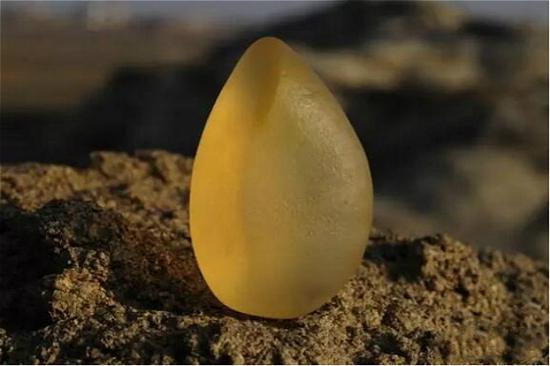
As jade’s market downturn reaches a turning point, now is the perfect time to invest in and collect new jade varieties. With the growing potential for appreciation in these new jade types, Jin Si Yu—known for its unique cultural significance—is increasingly beloved by collectors. The jade industry is undergoing a reshuffle, where only the strongest players will survive. Those who manage to stay in the game until the end will undoubtedly be recognized by the market. For collectors, this presents an excellent opportunity: right now, Jin Si Yu is trading at a price low point, making it a highly cost-effective investment if you act now.
Currently, in the jewelry and jade industry, there are many investment opportunities available. While earlier investments in items such as jadeite, diamonds, and Hetian jade have already reached their expected peak, the newly emerging “Nanhong” — which has been upgraded from agate to jade — along with Jin Si Yu and Alashan jade, have now been included in the “National Jade Naming Standards List.” All of these developments have given rise to brighter market prospects for these new jade varieties.
Links:
Address: Room 909, 9th Floor, Science & Technology Building, Eastern Software Park, No. 90 Wensan Road, Hangzhou City, Zhejiang Province Telephone:0571-85115488

Scan with your phone
Open the mobile website