
浙江之源资产评估有限责任公司
The relationship between sand and gravel aggregates and concrete.
Release time:
2017-04-19
Source:
China Sand and Gravel Association, 2017-03-07
The relationship between the quality of sand and gravel and that of concrete.
Traditionally in China, sand and gravel have been referred to as the aggregate of concrete because rocks possess high strength and significantly contribute to the overall strength of concrete. Consequently, when selecting sand and gravel, emphasis has primarily been placed on their strength. Rocks with cleavage tend to produce smaller crushed particles and a greater proportion of needle- and flake-shaped particles. As a result, the 5 mm to 10 mm nominal particle size fraction exhibits a remarkably high water demand. Consequently, the so-called "continuous gradation" effectively contains almost no particles within the 5 mm to 10 mm range. It can thus be argued that the current state of coarse aggregate is also a result of user misunderstanding. Both parties have misconceptions about the role of sand and gravel in concrete.
The relationship between aggregate and concrete strength
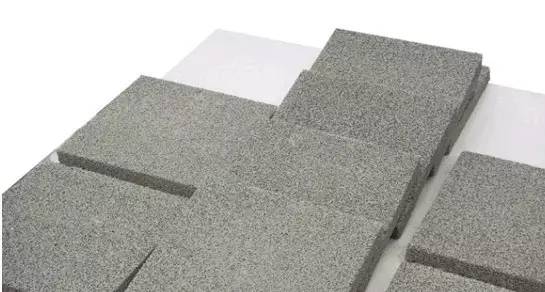
In the past, when plastic concrete was predominantly used, the strength of aggregates did indeed affect the strength of concrete to varying degrees. In the late 1950s, China once had component factories that employed dry-hard concrete—concrete with a low water-to-cement ratio and minimal paste content. Such mixes had no slump at all; when tested using a V-B consistency meter, their workability exceeded 20 seconds. This type of concrete could only be used for precast components, requiring vigorous compaction under high-frequency vibration tables. It imposed heavy physical labor on workers, generated deafening noise, and consumed enormous amounts of energy. Consequently, this type of concrete was soon discontinued. The strength of such concrete depended primarily on the strength of the aggregate and the bond strength at the paste-aggregate interface; it was evident that the aggregate made a significant contribution to the overall strength of the concrete. At that time, low-plasticity concrete (with slump ranging from 10 mm to 30 mm) and plastic concrete (with slumps ranging from 30 mm to 50 mm, 50 mm to 70 mm, or 90 mm to 90 mm) were commonly used. Starting in the early part of the last century, flowable concrete—with slumps exceeding 100 mm—began to be adopted. As the paste-to-aggregate ratio increased, the role of aggregate in determining concrete strength gradually diminished. In pumped concrete (with slumps exceeding 150 mm—today, most pumped concretes have slumps well over 200 mm), the aggregate remains in a suspended state within the concrete, and the concrete’s strength becomes essentially independent of the aggregate’s strength. The fact that high-strength (C50 and above) pumped concrete can now be produced using lightweight aggregates with very low particle strength—such as expanded clay pellets—is clear evidence of this phenomenon. In modern concrete, while sand and gravel no longer play a primary role in determining strength, they nonetheless continue to play an indispensable and critical role.
However, when the water-to-cement ratio is fixed, the amount and particle size of sand and aggregate affect both the thickness and number of the interfacial transition zones in concrete, thereby influencing the strength of the concrete.
Figure 4 shows that when the water-to-cement ratio is high, the effect of aggregate size on strength is not significant; the lower the water-to-cement ratio, the greater the impact. At a given water-to-cement ratio, the strength of the paste is higher than that of the mortar, and the strength of the mortar is higher than that of the concrete.
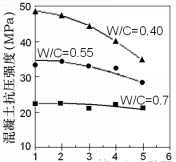
Maximum particle size of gravel (cm)
Figure 4: Relationship between Concrete Compressive Strength and Maximum Aggregate Size
The skeletal role of sand and gravel in concrete is primarily to stabilize the volume.
The linear thermal expansion coefficient of most common rocks used in concrete ranges from 5×10⁻⁶ to 13×10⁻⁶/℃, whereas the linear thermal expansion coefficient of hardened cement paste made from silicate cement is between 11×10⁻⁶ and 20×10⁻⁶/℃—a difference of roughly a factor of two. Without aggregate, hardened cement paste would undergo significant shrinkage; even slight constraints could lead to severe cracking.
The ratio of concrete shrinkage Sc to cement paste shrinkage Sp depends on the aggregate content a: Sc = Sp(1 - a)^n (where n is an empirical coefficient ranging from 1.2 to 1.7 and is related to the elastic modulus of the aggregate). As shown in Figure 5, the greater the water-to-cement ratio of the concrete, the more significant the effect of aggregate content on concrete shrinkage. Figure 6 illustrates that, with regard to the influence on plastic shrinkage of concrete, the order is paste > mortar > concrete; moreover, the greater the cement content in concrete (and the lower the aggregate content), the more pronounced this effect becomes. The same trend applies to the impact of aggregate on concrete autogenous shrinkage (see Figure 7).
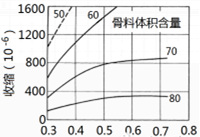
Water-cement ratio
Figure 5: Effect of Aggregate Content on Concrete Shrinkage
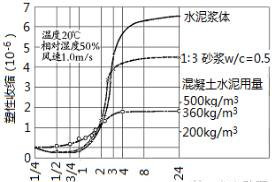
Time after pouring (hours, logarithmic scale)
Figure 6: The Influence of Aggregates on Plastic Shrinkage of Concrete
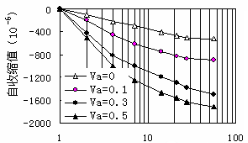
Figure 7: Effect of Aggregate Content on Self-Strain in Concrete
The Influence of Aggregate Particle Size and Shape on Other Properties of Concrete
The influence of particle size
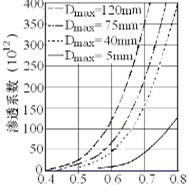
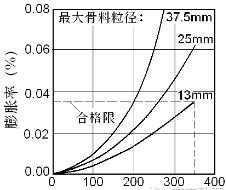
Figures 8 and 9 illustrate the relationship between aggregate particle size and the permeability and freeze-thaw resistance of concrete. As shown in Figure 8, the higher the water-to-cement ratio of the aggregate, the greater the influence of aggregate particle size on concrete permeability; this effect is minimal for mortar. Figure 9 indicates that larger aggregate particle sizes reduce the freeze-thaw resistance of concrete.
Water-cement ratio
Figure 8: Relationship between Aggregate Particle Size and Concrete Permeability Coefficient
Number of freeze-thaw cycles
Figure 9: Relationship between Aggregate Particle Size and Concrete Freeze-Thaw Resistance
The influence of particle shape
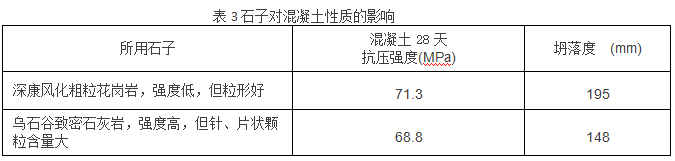
For concrete that meets certain requirements for strength and compactness, the workability of the fresh mix is the most critical property in ensuring the final quality of the concrete. In terms of concrete workability, the particle shape of the aggregates can sometimes have an even greater impact than their gradation. Ideally, aggregate particles should have a uniform spherical shape (i.e., macroscopic sphericity). At the same surface roughness, aggregates with a uniform spherical shape have the smallest specific surface area and thus require the least amount of water. This combination allows them to simultaneously meet both workability requirements and the hardened concrete properties such as strength. Table 3 shows the different performances of C60 concrete prepared using various aggregates for a particular project. When concrete made with weathered coarse-grained granite had a slump of 195 mm, its 28-day strength reached 71.3 MPa. In contrast, the aggregate from Wushigu—a dense limestone—has high strength but poor particle shape. As a result, the concrete mix required a large amount of water, and under the water-to-cement ratio necessary to meet the strength requirements, the mix exhibited poor flowability. To achieve a slump of 195 mm, one approach would be to increase the water content, thereby raising the paste-to-aggregate ratio. However, this not only proves uneconomical but also increases the risk of cracking. Another approach would be to raise the water-to-binder ratio, yet this would compromise the required strength. As shown in Table 3, when the water-to-cement ratio could not be reduced further, the resulting concrete achieved a strength of only 68.8 MPa while the slump remained below 150 mm—clearly inferior to the performance of the weathered coarse-grained granite, which has lower strength but better particle shape.
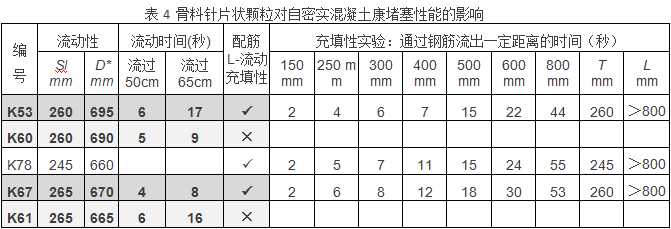
The particle shape of aggregates significantly affects the workability of self-compacting concrete. As shown in Table 4, with identical mix proportions and consistent fluidity, K53 performs much better than K60 when passing through rebar, and similarly, K67 outperforms K61. However, K60 and K61, despite having the same mix proportions and fluidity, are blocked by rebar because their aggregate contains two percentage points more flaky particles (7% vs. 5%).
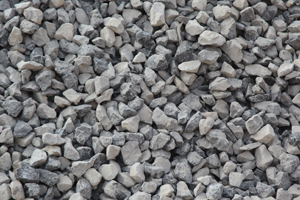
The current “difficulty” in producing concrete in China is closely related to the shape of aggregate particles. A comparison of the commonly used stone particle shapes in China today clearly reveals the quality gap. We can compare these shapes with those of stones commonly used in Japan and China. In Japanese stones, needle- and flake-shaped particles are virtually absent, whereas in China’s commonly used stones, such particles are readily apparent—and even in terms of size, equidimensional particles are rare.
On the gradation of aggregates
The continuous gradation of aggregates refers to the rational proportioning of particles of different sizes, aiming not only to achieve the lowest void ratio of the aggregate but also to minimize the aggregate’s specific surface area. However, in aggregate production, it is possible only to control the gradation in terms of quantity, whereas achieving uniformity in the overall product gradation is practically impossible. This is because sand and gravel are bulk materials composed of discrete particles; under the dynamic forces involved in loading, unloading, and transportation, the originally well-mixed aggregate of various particle sizes tends to segregate: smaller particles tend to move downward, while larger particles remain on the surface. As the material piles up into a conical shape, the larger particles on the surface will roll down along the slope of the cone. Consequently, the gradation of the material pile becomes imbalanced, and the aggregates sampled from such piles for concrete production no longer exhibit proper gradation. For this reason, in developed Western countries, sand and gravel are supplied in graded forms, and users are expected to perform their own gradation adjustments according to specific requirements, feeding the materials into the mix in accordance with the specified gradation levels. The continuous gradation stipulated in standards is thus directed not at producers but at users. To ensure that concrete meets its performance requirements, China’s sand and gravel standards should, at a minimum, explicitly specify graded supply for crushed stone. In China, some concrete mixes have already adopted single-size or two- or three-stage gradations, resulting in a reduction of around 20% in cement usage. However, if the particle shape is poor, it remains impossible to achieve a void ratio of less than 40% for the crushed stone.

Links:
Address: Room 909, 9th Floor, Science & Technology Building, Eastern Software Park, No. 90 Wensan Road, Hangzhou City, Zhejiang Province Telephone:0571-85115488

Scan with your phone
Open the mobile website