
浙江之源资产评估有限责任公司
The Global Mining Development Report is freshly released.
Release time:
2022-10-26
Source:
Mining Report
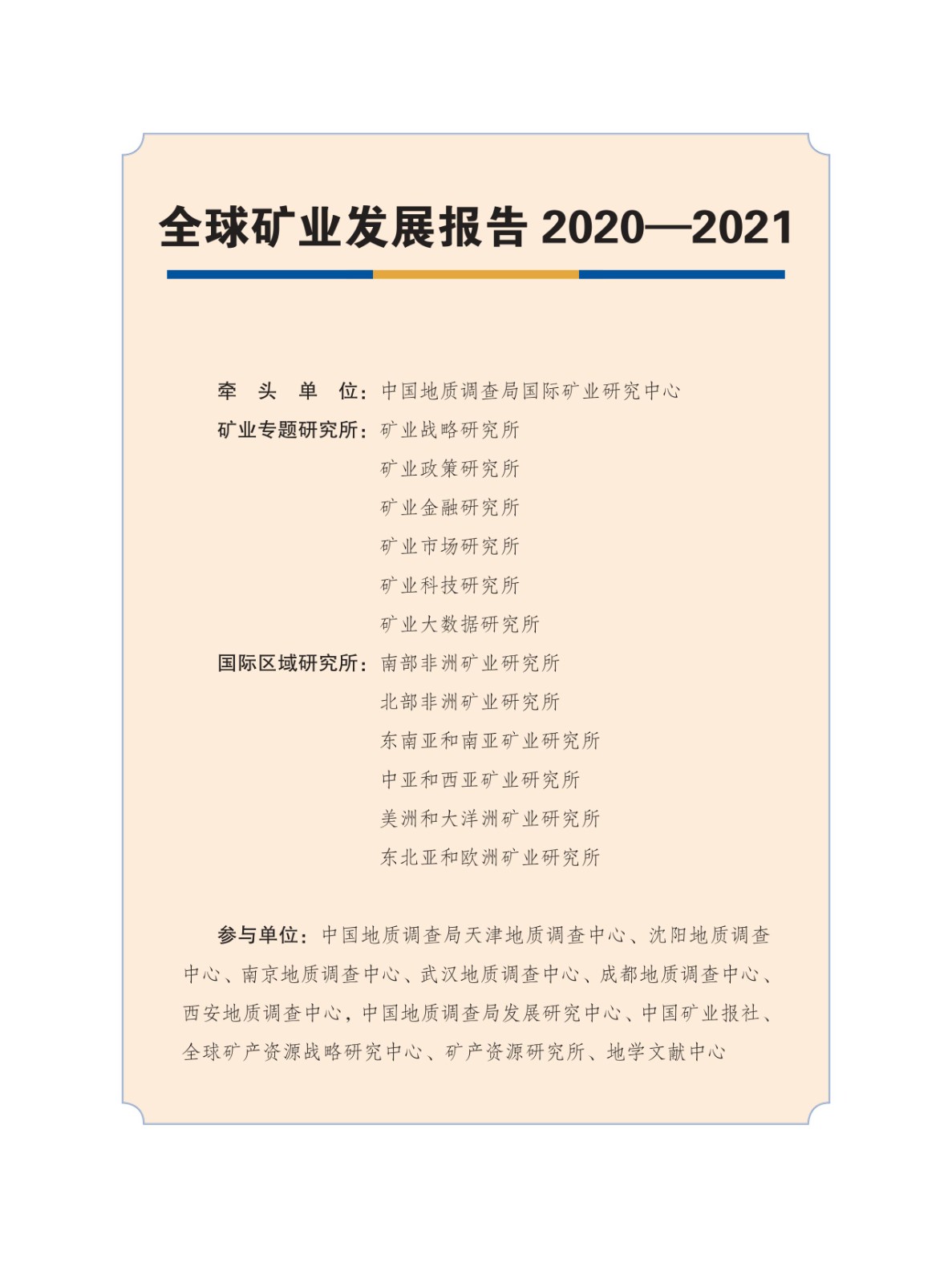
On October 22, 2021, at the 23rd China International Mining Conference, the International Mining Research Center of the China Geological Survey under the Ministry of Natural Resources released the “Global Mining Development Report (2020-2021).” This report is the world’s first comprehensive analysis of global mining development trends since the outbreak of the COVID-19 pandemic, and also represents an important research achievement by a Chinese institution in supporting the sustainable development of the global mining industry. The specific contents are as follows:
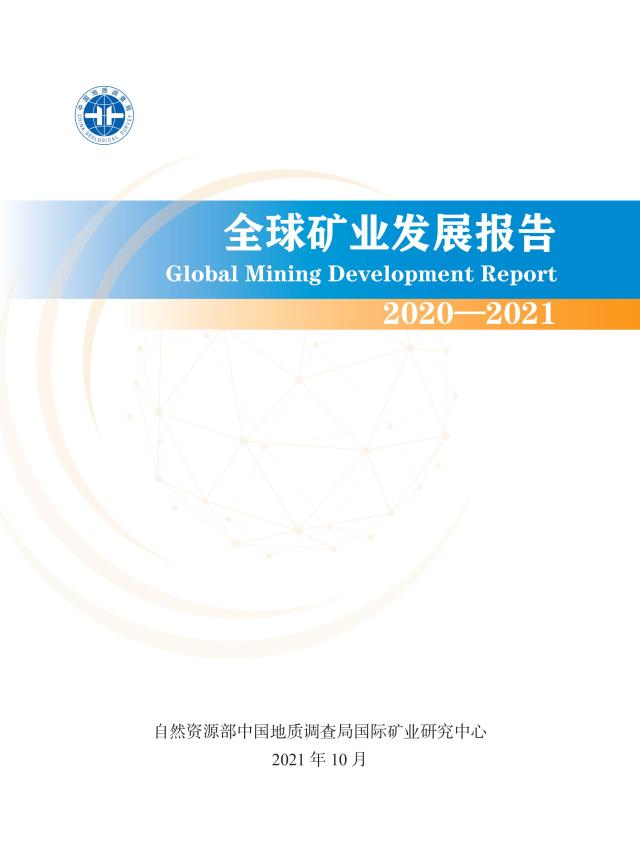
The report shows that since the outbreak of the COVID-19 pandemic, global demand for energy resources has generally contracted and its structure has become increasingly diversified. Consumption of conventional energy sources and bulk minerals has declined, while consumption of new-energy minerals has grown relatively rapidly. In 2020, global total energy consumption fell by 4.5%, marking the largest decline since World War II. Oil, coal, and natural gas saw declines of 9.5%, 3.9%, and 2.1%, respectively, whereas renewable energy sources such as wind, hydro, and solar power grew by 9.7%. Iron and aluminum experienced declines of 0.2% and 0.7%, respectively, while copper, lithium, and cobalt saw increases of 6.2%, 15.3%, and 7.3%, respectively.
The global supply capacity of mineral resources has been severely disrupted, highlighting the vulnerability of resource supply chains. The pandemic has dealt a significant blow to mining production worldwide. According to incomplete statistics, at one point, 276 mines in 36 countries or regions were temporarily shut down, and more than 1,600 mining projects have been affected by the pandemic. In 2020, the total global output of major mineral products declined by 3.7% compared to 2019. Among these, the output of energy, metal, and non-metallic minerals fell by 5.1%, 1.4%, and 0.5% year-on-year, respectively. Notably, the decline in the production of energy and mineral products exceeded the decline in consumption. Meanwhile, normal international trade in mineral products has been hampered, seriously jeopardizing the security and stability of global mineral resource supply chains.
Global prices of major mineral commodities have rebounded in a “V”-shaped pattern, with prices of gold, copper, iron ore, and other minerals reaching historic highs. In 2020, global investment in mineral exploration and total investment in the mining industry amounted to approximately US$8.3 billion and US$290 billion, respectively—down 11% and 13% from 2019. However, 2021 is expected to see a recovery to 2019 levels. The global mining capital market initially experienced a downturn but then staged a strong rebound, with significantly increased investor attention toward the mining sector. In 2020, the number and amount of global mining project financings rose by 17% and 25%, respectively, year-on-year. In the first half of 2021, this upward trend continued, with both the number and amount of financings increasing by 12% and 261%, respectively, year-on-year.
Major countries and regions are undergoing intensive adjustments to their mining policies, presenting both challenges and opportunities. Globally, mining investments generally face three major risks: first, rising political and security risks characterized by regime changes and social unrest; second, the resurgence of protectionism, primarily manifested in tax hikes and nationalizations; and third, increasing barriers to mining investment, largely driven by heightened security reviews. At the same time, some mining countries are creating opportunities and easing constraints for international mining investments by relaxing mining regulations and introducing favorable policies.
Mining companies continue to show diverging performance and comprehensive strength, accelerating their deployment in new-energy mineral resources. Since the pandemic began, oil and gas companies have seen a significant drop in profits, while large mining companies whose businesses are primarily focused on solid minerals have maintained stable profitability. Since the second half of 2020, mining companies’ performance has generally rebounded, with revenues and market capitalization steadily rising. The combined market capitalization of the world’s top 50 mining companies has reached US$1.47 trillion, hitting a new all-time high. Mining giants are further enhancing their overall competitiveness and speeding up their strategic positioning in new-energy minerals such as copper, lithium, cobalt, and nickel.
Climate change is driving humanity’s production and lifestyle toward a low-carbon transition, and the global supply-and-demand structure of mineral resources and the landscape of the mining industry are poised for significant changes. Under the backdrop of a low-carbon economy, the growth rate of demand for traditional mineral resources is further slowing down, while demand for clean energy minerals and strategic emerging minerals is rapidly increasing. The status of countries traditionally supplying conventional energy resources such as coal, oil, iron, and manganese will decline somewhat, whereas the status of countries supplying strategic emerging minerals like lithium, cobalt, and nickel will continue to rise.
China swiftly brought the epidemic under control and achieved a rapid economic recovery, playing the role of a global economic engine and effectively boosting global demand for energy and resource consumption. In 2020, despite an overall contraction in global demand for mineral resources, China bucked the trend and posted growth in its consumption of oil, iron, copper, and aluminum, increasing by 2.0%, 9.1%, 17.1%, and 6.4% year-on-year, respectively. Imports rose by 7.3%, 9.5%, 33%, and 10.9%, respectively, thereby playing a crucial role in stabilizing the global mining market. At the same time, through mutually beneficial international mining cooperation, China has established positive bilateral relationships with countries around the world in the development and trade of mineral resources, actively safeguarding the normal order of international mineral product trade and promoting open cooperation and common development in the global mining sector.
The report predicts that, as market demand rebounds rapidly following the pandemic, expectations are rising for major developed economies to gradually phase out their large-scale quantitative easing policies. This is leading to structural divergence in mineral resource supply chains and industrial chains, introducing uncertainty into the global mining industry and making continued volatile adjustments a new normal. In the medium to long term, global demand for mineral resources will become increasingly diversified: demand for strategic and emerging minerals will accelerate, while demand from emerging economies such as China will remain at relatively high levels. These trends will undoubtedly drive sustainable development and structural changes in the global mining sector.
Report download link:
Global Mining Development Report 2020-2021
Global Mining Development Report 2020-2021 (English)
Previous page
Links:
Address: Room 909, 9th Floor, Science & Technology Building, Eastern Software Park, No. 90 Wensan Road, Hangzhou City, Zhejiang Province Telephone:0571-85115488

Scan with your phone
Open the mobile website