
浙江之源资产评估有限责任公司
The historical origins, resource characteristics, and main distribution areas of China’s gold mining industry.
Release time:
2017-04-20
Source:
I. Ancient Understanding of Gold
Gold is one of the earliest metals known to humankind. In China, it is said that the Three Sovereigns and Five Emperors once used gold as a raw material to refine elixirs—medicines purported to confer immortality. Although this legend has been widely circulated, no concrete evidence has yet been found to substantiate it. However, archaeological discoveries indicate that the mining and use of gold in China date back at least 4,000 years; around the Neolithic period, our ancestors had already become familiar with gold. According to the dating of various recently excavated tombs and sites uncovered by archaeologists, the earliest examples date from the early Shang Dynasty—for instance, ear-shaped gold ornaments unearthed from early Shang Dynasty tombs in Zhengzhou, Henan Province; gold ingots, gold leaf, and gold sheets recovered from Yin Dynasty tombs in Huixian, Henan Province, and from the Xiaotun Ruins in Anyang, Henan Province. These findings not only demonstrate that China began using gold more than 3,500 years ago but also confirm that our ancestors had already mastered the techniques for processing gold by that time.

Modern mineralogical research shows that there are only a few naturally occurring alloy minerals. Because gold and silver atoms have the same atomic radii and similar crystal structures, they can form a complete solid-solution series. When the silver content is less than 5%, the mineral is classified as native gold; when the silver content ranges from 5% to 15%, it is called silver-bearing native gold—a type historically referred to as "shengjin." In ancient China, the gold recognized by our ancestors was primarily native gold.
In the early Southern Song dynasty, Zhou Qufei recorded in his work {Lingwai Dai Da Juan Qi·Jinshi Men}: "All gold does not emerge directly from ore; rather, it naturally blends into sand and stone. The smaller grains resemble wheat kernels, while the larger ones are as big as beans. Even larger ones, about the size of a fingertip, are called 'shengjin'—raw gold." Yuan Zhou Mi, in his {{Kui Xin Za Ji Xu}}, noted: "In Xidong, Guangxi, gold is produced, and the local miners can all pan for it. The fine particles look like earthworm mud; the larger ones are as big as melon seeds—known as 'shiming guazi jin.' The tiny fragments, resembling oatmeal, are called 'mufu jin.'" Ming scholar Li Shizhen, in his {{Ben Cao Gang Mu}}, wrote: "Du Gu Tao said that naturally occurring buds are called 'huangya.' Here, 'huangya' refers to tree-like natural gold." There is also the saying: "Flour gold comes from the Wuxi region and the Han River; the larger pieces are as big as melon seeds, while the smaller ones are like wheat kernels." Horseshoe gold is the purest form of gold—two horseshoes weigh one jin. Ming scholar Song Yingxing, in his {{Tian Gong Kai Wu·Wujin}}, described: "Gold found in mountain rocks is called 'ma ti jin' if large, 'gan lan jin' if medium-sized, and 'gua zi jin' if small. Gold found in river sands is called 'gou tou jin' if large, and 'mai fu jin' or 'kang jin' if small. Gold dug from wells on flat ground is called 'mian sha jin'; the larger pieces are known as 'dou li jin'." In Gu Yingtai's {{Bo Wu Yao Lan·Volume Eight}} from the Qing dynasty, we read: "Kua zi jin is produced in the sandy soils of Huguang and northern Hunan, resembling the waistband of a wax tea belt. Dan dou jin is found in the soil of Liangzhou; it must be dug more than ten zhang deep before it appears, and its shape is round and flattened like a broad bean. Mai ke li jin is found in the sandy stones of counties under Liangzhou, and its shape is pointed like a wheat kernel."
According to the historical records mentioned above, we can see that the ancient Chinese ancestors’ vivid descriptions of natural gold’s forms were remarkably accurate and closely resemble the descriptions used in modern mineralogy.
II. The Historical Origins of Ancient Chinese Gold Mining
China’s gold production has left a profound mark on the global history of gold development, constituting an important chapter in the annals of world gold history. From the perspective of global gold mining history, most countries began by panning for alluvial gold. In China, gold mining activities first emerged in the early stages of the slave society. The alluvial gold obtained through panning was derived from sand and gravel layers containing gold—historically referred to as “river gold” or “wheat gold.” Later, depending on differences in the geological conditions where alluvial gold was found, it was further classified into two types: alluvial gold panned from riverbed sands and alluvial gold mined by digging wells on flat land. The era of lode gold mining came much later than that of alluvial gold, roughly beginning between the Tang and Song dynasties. The working people expended tremendous effort to obtain this precious metal. The Tang poet Liu Yuxi captured the hardships of gold production and the extravagance of the aristocracy in his poetry: “The sun shines, clearing the mist over the Changzhou River; gold-panning girls fill every nook and cranny along its banks. Beautiful women’s jewelry and royal seals—all come from the depths of the sands and rivers.” The Shang dynasty gold armlets and earrings unearthed in Pinggu, Beijing; the Zhou dynasty golden staff discovered in Guanghan, Sichuan; the gold-threaded jade burial suit from the Ma Wang Dui tomb in Changsha, Hunan, dating back to the Han dynasty; the pure gold twelve-ringed censer staff from the Tang dynasty; and the dazzling gold ornaments from the Ming dynasty—each artifact vividly illustrates the long history of gold mining in the Chinese nation and the superb craftsmanship involved in gold production. China’s gold production began in the Shang dynasty, flourished during the Han dynasty, declined during the Two Jin and Southern and Northern Dynasties periods, and then revived during the Tang dynasty. After the Tang dynasty, during the Song, Yuan, Ming, and Qing dynasties, gold mining was sometimes banned and sometimes permitted again, with periods of prosperity alternating with downturns, thus hindering our nation’s rapid advancement in gold production.

III. Distribution of Gold Production Sites Throughout China’s History
China boasts an abundant treasure of ancient texts, which contain detailed records—varying in depth—of gold-producing regions throughout successive dynasties, the flourishing state of gold mining activities, descriptions of gold mines, and gold deposits themselves. As for gold-producing areas, during the pre-Qin period, Yunnan had Lishui, Hunan had Dongting, Hubei had Hanshui, and Henan had Ruhé. From the Han Dynasty through the Northern Song Dynasty, Shandong was home to Penglai and Ye County; Shaanxi had Xicheng (present-day Ankang) and Luonan; and Sichuan had Meizhou and Guangyuan. During the Yuan, Ming, and Qing dynasties, the number of gold-producing regions surged dramatically: Hebei had Qian'an and Fengrun; Shanxi had Xinzhou; Jiangxi had Raoshan and Fuzhou; Shandong had Qixia and Laizhou; Anhui had Chizhou; Hunan had Yuezhou; and Shaanxi had Lantian. Moreover, gold mines were also found in Sichuan, Yunnan, Guangdong and Guangxi, as well as in the three northeastern provinces. Many of these regions continue to this day as important gold-producing bases and key gold-producing provinces in China.
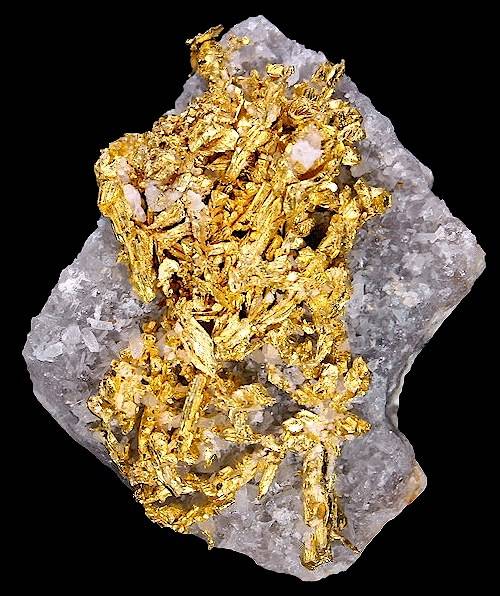
IV. Layout and Production Distribution of the Gold Industry in China’s Modern Provinces (Autonomous Regions, and Municipalities)
Tianjin Municipality: Rich in gold mineral resources and with a weak foundation for gold industry production, Tianjin currently has only two operating entities: the Huanghuashan Gold Mine in Jixian County and the Datong Steel Plant, which specializes in the comprehensive recovery of gold and silver.
Beijing Municipality: Gold resources are primarily concentrated in the northeastern mountainous areas, with the gold-producing counties being Huairou, Pinggu, Miyun, and Changping. The city has two mines with established production capacities—the Qifengcha Gold Mine in Huairou County and the Wanzhuang Gold Mine in Pinggu County. Additionally, there are four township-level processing plants without fixed production capacities. The Jingdu Gold Smelting Plant has already reached a processing capacity of 400 tons per day.
Hebei Province: Currently, there are 6 key gold-producing cities and 25 gold-producing counties.
Inner Mongolia: The four major gold-producing regions in the entire region are Chifeng City, Baotou City, Hohhot City, and Hulunbuir League. None of the 21 state-owned gold enterprises in the region have reported losses. Among the larger-scale enterprises currently under construction are the Hademen Gold Mine, Jinchanggouliang Gold Mine, and Honghuagou Gold Mine.
Liaoning Province: Fuxin City, Jinzhou City, Benxi City, and Liaoyang City have overfulfilled the national plan two months ahead of schedule. Chaoyang City, Dandong City, Huludao City, Fushun City, Dalian City, Wulong Gold Mine, and Erdaogou Gold Mine.
Jilin Province: Currently, the province has 31 gold-producing enterprises, including 31 enterprises with a daily production capacity of over 10,000 m³ of rock gold and placer gold. These mining enterprises include Jiapigou Gold Mining Co., Ltd., Huolong Gold Mine, Hunchun Gold-Copper Mine, Haigou Gold Co., Ltd., Daxiangou Gold Mine, Jincang Gold Mine, Xiangfang Gold Mine, Naozhi Gold Mine, Laojinchang Gold Mine, and Jinchanggou Gold Mine, among others.
Heilongjiang Province: Yichun City, Heihe City. Rock gold mines of various sizes have been put into operation one after another, and the production capacity and technological levels of some rock gold mining enterprises have steadily improved. Rock gold mines such as Laozhushan and Dongfengshan are now operating stably, with significant improvements in ore dressing recovery rates; the Da'an River gold mine has suddenly risen to become a “ten-thousand-ounce mine.”
Jiangsu Province: the Yunhe Gold Mine in Lishui County and the Tangshan Gold Mine in Jiangning County. Significant progress has been made in making full and rational use of the province’s gold resources and in harnessing the enthusiasm of local governments to develop mining operations, making these mines a new growth engine for Jiangsu Province’s gold industry.
Zhejiang Province is home to several prominent gold mining enterprises, including Suichang Gold Mine, Zhuji Gold Company, and Shaoxing Gold Mine. Other mines, such as Dongyang Gold Mine, Longquan Gold Mine, and Yangmeigang Gold Mine, all face resource crises to varying degrees.
Anhui Province: Cities and counties including Tongling, Chizhou, Xuancheng, Huoshan, and Qingyang—as well as the Huoshan Gold Mine, Chaoshan Gold Mine, and Matou Gold Mine—have all become major contributors to local tax and profit revenues.
Fujian Province: The gold industry started relatively late. Guided by the principle of “concentrating resources on developing a few key mines,” Fujian is accelerating the construction of the Shuangqishan, Hebaoshan, and Taiyangshan gold mines and expanding the production capacity of the Shanghang Zijinshan gold mine.
Jiangxi Province: Gold production is a pillar industry in counties and cities such as Dexing City, Ruichang City, Fuliang County, and Xiushui County. Jiujiang City has become a city (or district) with gold production exceeding 10,000 taels.
Shandong Province: China’s largest gold-producing province, Shandong boasts a total of 71 gold mines, primarily located in six cities (Yantai, Weihai, Rizhao, Linyi, Qingdao, and Weifang) and 17 counties (cities and districts). There are two gold-mining vessels and three gold-smelting plants. All seven of the nation’s top gold-producing mines are situated in Shandong.
Henan Province: Henan continues to maintain its position as the second-largest gold-producing province in the country. Sanmenxia City has produced 250,000 taels of gold, Luoyang City produces 100,000 taels annually, and Nanyang City exceeds 50,000 taels. Three mines—Wen Yu, Tong Gou, and Jin Qu—have joined the ranks of those producing over a ton of gold annually. Local state-owned gold enterprises have become the primary source of fiscal revenue for counties including Lingbao, Tongbai, Songxian, Luoning, Luanchuan, and Xixia.
Hubei Province: There are 21 gold-producing cities, prefectures, and counties. The major gold-producing cities (and counties) and mines include Huangshi City, Yichang City, Yichang County, Zigui County, Xianning Region, Yangxin County, Luotian County, Jiguanzui Gold Mine, and Zigui County Gold Mine.
Hunan Province: Yueyang City, Yiyang City, Xiangxi, Longshan, Huangjindong, Mopin, Shaoyang City, Loudi Area, Zhuye, Shuikoushan, and Yisb.
Guangdong Province: Zhaoqing City is a key gold-producing base in Guangdong Province. More than 200 gold deposits (and sites) have been discovered across the city’s eight counties (cities and districts), including two large-scale gold mines, one medium-sized gold mine, and numerous small-scale gold sites scattered throughout the region.
Counties in the Guangxi Zhuang Autonomous Region: Gaolong Gold Mining Co., Ltd., Baise Area, Nanning Area, Guilin Area, Longlin County, Tianlin County, Lingyun County, Longsheng County.
Hainan Province: Currently, only the Dongfang Gold Mine, the Erjia Gold Mine in Dongfang County, the Fuwen Gold Mine in Ding'an, and the Jinchang Gold Mine are operational.
Guizhou Province: Most of China's fine-grained disseminated gold deposits are found in Guizhou Province. The province has a total of 7 prefectures (cities) and 18 counties (cities) that produce gold, among which Qinglong and Anlong are the two counties with annual gold production exceeding 10,000 taels. The province’s key gold-producing mines include the Gotang Gold Mine, the Zimuhuan Gold Mine in Xingren County, the Tianzhu Gold Mine, and the Laowanchang Gold Mine, among others.
Yunnan Province: Key mines including the Mojiang Gold Mine and the Yuanyang Gold Mine.
Tibet: There are currently 21 gold mining enterprises throughout the region, located in 11 counties across four prefectures. Specifically: 13 are in the Nagqu Prefecture, 5 in the Ali Prefecture, 2 in the Shannan Prefecture, and 1 in the Shigatse Prefecture. The largest placer gold deposit is located in the Benna Zangbu area.
Sichuan Province: The key gold-producing areas are mainly concentrated in Guangyuan, Ganzi, Liangshan, and Aba. Major production sites include Sandiao, Yuzixi, Kangding, Tagong, and Jinchanggou. Additionally, the Baishui Gold Mine, located in the Bailongjiang River basin in northern Sichuan Province, once operated three gold-mining vessels with the largest capacity in China—each with a volume of 300 liters. The Guangyuan gold mines have also established multiple sand-gold mining bases in Yangmo, Zhaohua, and Hujiao.
Ningxia: Lacks abundant gold resources.
Shaanxi Province: Gold production continues to rank fourth nationwide. The three major gold-producing regions—Weinan, Hanzhong, and Baoji—account for 86% of the province’s total gold output. The key gold mines include Taibai Gold Mine, Dongtongyang Gold Mine, Xiao Kou Gold Mine, Chen Er Gold Mine, Zhen’an Gold Mine, Ankang Gold Mine, and Tongguan Gold Mine, among others.
Qinghai Province: The gold industry in key gold-producing counties such as Banma, Chengdu, Dulan, Tongren, Ulan, and Dachaidan has become a pillar industry for the local economy.
Xinjiang: The number of gold production enterprises has grown to 28, including 27 rock gold mines and 10 gold-mining vessels. The largest gold mine in the province is the Axi Gold Mine.
Gansu Province: It ranks seventh among all provinces in the country in terms of gold production.
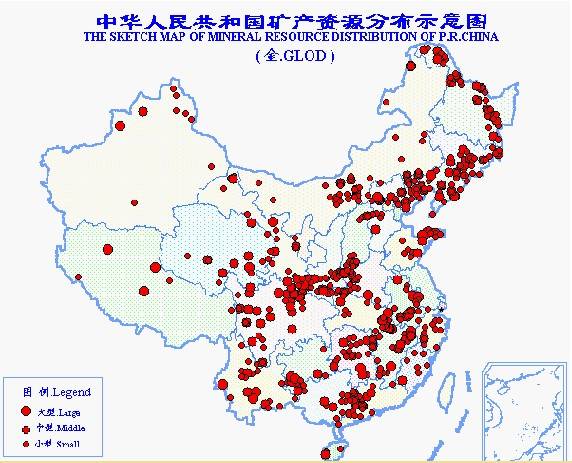
China boasts relatively abundant gold mineral resources. The country’s total proven gold reserves amount to 4,265 tons. Gold deposits are widely distributed across China; with the exception of Shanghai Municipality and the Hong Kong Special Administrative Region, gold mines can be found in every province (autonomous region, or municipality) nationwide. There are currently 1,265 mining areas with confirmed reserves. By province or autonomous region, Shandong has the largest number of independent gold deposits, accounting for 14.37% of the nation’s total gold reserves; Jiangxi has the highest concentration of associated gold deposits, making up 12.6% of the total reserves. Other provinces—such as Heilongjiang, Henan, Hubei, Shaanxi, and Sichuan—also possess relatively rich gold resources. Gold deposits can be broadly categorized into two major types: endogenic and exogenic. Among endogenic deposits, the most important are those hosted in altered rocks along magmatic-hydrothermal fracture zones and quartz vein-type deposits. The former includes the Jiaojia gold deposit in Shandong, while the latter is exemplified by the Xiaoqinling region. Sedimentary-reformed fine-grained gold deposits hold significant exploration potential (e.g., the Qianxinan gold deposit in Guizhou). Placer gold deposits also play an important role. The geological age range of gold deposits is extensive, spanning from the Archean Eon, dating back approximately 2.8 billion years ago, all the way through the Quaternary Period. However, 56% of the nation’s gold reserves are concentrated in the Precambrian era, followed by the Mesozoic and Cenozoic eras, which together account for 36% of total reserves. Paleozoic gold deposits are relatively scarce, representing only 5.7% of the total reserves.
V. Gold Mines in Relatively Representative Provinces
1. Gold mines in Heilongjiang Province:
The Mohe Gold Mine and the Huma River Gold Mine have a long history, with records dating back to the Qing Dynasty. In the 1970s, the Tuanjiegou Gold Mine was discovered, and in the 1980s, the Laozuoshan Gold Mine was found and has since been developed on a large scale. Heilongjiang Province is home to more than 400 gold mining sites, including over 300 placer gold deposits and more than 70 vein-type gold deposits. Gold production has been steadily increasing. The major gold mining areas in Heilongjiang Province are located in Mohe, Huma, Aihui, Luobei, Huanan, Muling, and Dongning—forming a “golden belt” that stretches from north to south. The area of these concentrated gold-bearing regions typically ranges from 500 to 2,000 square kilometers, with the largest reaching up to 6,000 square kilometers.
2. Gold mines in Jilin Province:
The Jiapi Gou gold mine in Huaxun County, Jilin Province, boasts a long history. During the Tongzhi period of the Qing Dynasty, there were records indicating that the mine yielded as much as 500 taels of gold per day—a spectacle unprecedented at the time. Even today, the Jiapi Gou gold mine remains an important gold-producing region in Jilin Province. Currently, there are 16 identified gold mining sites, with more than 150 locations featuring alluvial gold and underground mine deposits. Among the most significant gold-producing areas are Erdao Xunzi, Jinchanggou in Ji’an County, Shuanghe Town, Jiapi Gou, Haigou, Jinchengdong Gold Mine, Tonghua, Boge Ya Zi Gold Mine, Cijuan Gou Gold Mine, and Hunchun River alluvial gold mine.
3. Liaoning Province Gold Mines:
Liaoning Province has a long history of gold mining, with more than 200 gold-mining sites scattered throughout the province. These sites are mainly concentrated in the eastern and western parts of Liaoning. In the Zhao Wuda League region, near Inner Mongolia, gold is also mined. Among the major large-scale gold-producing areas are Wulong and Sidao Gou.
4. Hebei Province Gold Mines:
The province’s mining history can be traced back to the Sui and Tang dynasties, and during the Ming and Qing periods, gold mining in Hebei Province had already reached a considerable scale. The province’s gold mines are mainly located in areas such as Chengde, Tangshan, and Zhangjiakou, with more than 530 gold mining sites distributed across 32 counties in seven different regions. A distinctive feature of these mines is their scattered distribution and small-scale operations.
5. Shandong Province Gold Mines:
Gold mining in this province can be traced back at least to the Northern Song Dynasty. Today, it has become one of China’s major gold-producing regions. The province ranks first nationwide in terms of total gold output value, annual production volume, profits, foreign exchange earnings, and gold reserves. The four large- and medium-sized mines—Jiaojia, Xincheng, Yinan, and Rushan—that have been newly built or renovated with state investment are promising new prospects for gold production in Shandong Province. Currently, among the nation’s 10 key gold mines, Shandong Province accounts for five, including the well-known Zhaoyuan Gold Mine and Sanshandao Gold Mine, which enjoy fame both domestically and internationally. In recent years, the grassroots gold-mining activities in Shandong Province have also developed rapidly, with more than 250 gold-mining sites scattered across regions such as Yantai and Linyi. Shandong’s gold resources are primarily concentrated in the Zhaoyuan and Yexian areas on the Jiaodong Peninsula, where the mining sites are relatively clustered and easily amenable to large-scale extraction.
6. Gold mines in Shanxi Province:
Gold mines in this province can be traced back at least to the Yuan Dynasty. In the 1830s, in Zhangsigou, Dai County, Shanxi Province alone, there were approximately 20,000 gold prospectors. Gold mining in Shanxi Province is conducted through a combination of state-owned and privately operated operations, with private mining playing the dominant role. Remarkably, Shanxi Province boasts a relatively high concentration of large nuggets of natural gold, ranging from several tens of grams up to 70 taels. Currently, the province has at least 85 active gold mining sites, primarily located in regions such as Hengshan Mountain, Wutai Mountain, Huyan Mountain, Tashan Mountain, and Zhongtiao Mountain.
7. Gold mines in Shaanxi Province:
South of the Qinling Mountains and along both banks of the Han River lies Shaanxi Province’s golden treasure land. As early as the Tang Dynasty, this region was already designated as a tribute-producing area. The Xiaorouling gold mine, located at the border between Shaanxi and Henan provinces, is a super-large gold deposit. In the Hengkou Basin, there is also a large placer gold deposit with stable grade, shallow burial depth, and ease of extraction. Meanwhile, two medium-sized placer gold deposits have been discovered at either end of the Hengkou placer gold deposit. The Hanzhong Basin is truly a treasure trove. Recently, another major gold deposit—the Yangpingguan Gold Mine—has been discovered in Yangpingguan, Hanzhong. This deposit boasts high and stable ore grades, making it exceptionally valuable both economically and in terms of mining feasibility.
8. Gold mines in Hunan Province:
Gold mining in Hunan Province dates back earlier than in other provinces, with records already appearing during the Eastern Zhou period. In ancient times, gold-mining sites stretched for dozens of kilometers along both banks of the Yan River, west of Hengyang. Around Hongluo Temple and Longgutang, there were as many as over 1,000 ancient gold-mining wells. After more than 2,000 years of mining, the shallow, high-grade gold deposits in Hunan have largely been exhausted; however, the underground gold resources remain remarkably abundant. Throughout the province, there are dozens of associated gold deposits that are well-suited for integrated mining operations. Gold-bearing quartz veins are concentrated in three tectonic uplift regions: central Hunan, eastern Hunan, and western Hunan.
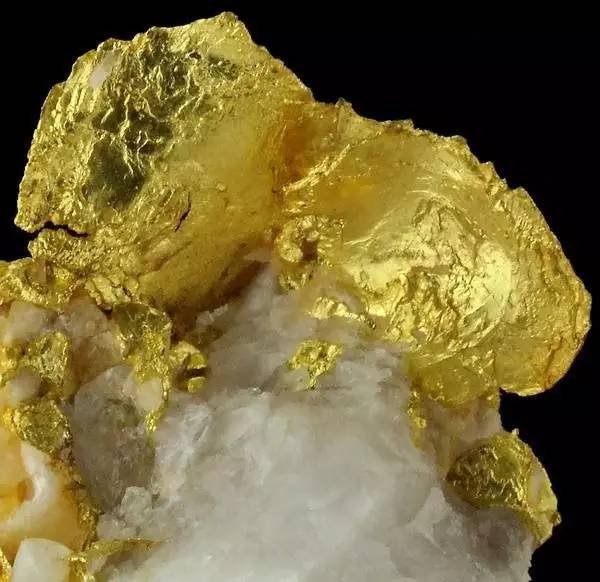
VI. Characteristics of China's Gold Mineral Resources
1. There are many types of ore deposits, but there is a shortage of world-class large-scale deposits.
China boasts a wide variety of gold deposit types. The main industrial types of gold deposits include: quartz-vein type, altered rock type in fractured zones, fine-vein disseminated type (granite type), tectonically altered rock type, iron-cap type, volcanic-subvolcanic hydrothermal type, and ultrafine-grained disseminated type. Among these, the altered rock type in fractured zones, the quartz-vein type, and the volcanic-subvolcanic hydrothermal type are the primary producers, accounting for approximately 94% of the total gold reserves.
Although China boasts a wide variety of gold deposit types and favorable geological conditions for exploration, to date no super-large gold deposits—such as the Rand-type deposits in South Africa, the Muruntau-type deposits in the former Soviet Union, the Homestake and Carlin-type deposits in the United States, the Homlo-type deposits in Canada, or the volcanic-hosted deposits in Japan and Papua New Guinea—have been discovered yet.
2. There are few large and extra-large gold deposits, but many small and medium-sized gold deposits.
Large and extra-large ore deposits account for only 9.58%, while medium-sized deposits make up 24.55%, and small-sized deposits account for 65.87%. Thus, it is evident that, in terms of quantity, China’s gold reserves are overwhelmingly dominated by medium- and small-sized deposits, with large-scale deposits being relatively few—in particular, rock-type gold deposits with reserves exceeding 50 tons. After supplementary exploration, the Jiaojia gold deposit will have total reserves reaching 130 tons, making it China’s first world-class rock-type gold deposit.
3. Resources are widely distributed, yet reserves are relatively concentrated.
Gold deposits in China are widely distributed. According to statistics, more than 1,000 counties (banners) across the country possess gold mineral resources. However, the proven gold reserves are relatively concentrated in the eastern and central regions of China, accounting for over 75% of the nation's total reserves. Among these, Shandong, Henan, Shaanxi, and Hebei provinces hold reserves that account for more than 46% of the country's rock gold reserves. Other provinces (autonomous regions) with reserves exceeding 100 tons include Liaoning, Jilin, Hubei, Guizhou, and Yunnan. Shandong Province boasts rock gold reserves totaling 593.61 tons, nearly one-fourth of the nation's total rock gold reserves, placing it first nationwide. Placer gold is primarily found in Heilongjiang Province, accounting for 27.7%; Sichuan ranks second, with a share of 21.8%. Together, these two provinces account for nearly half of the country's total placer gold reserves.
4. Gold deposits are characterized by few high-grade ores, many medium-grade ores, significant grade variations, and a wide gap between rich and poor ores.
According to the 1996 Statistical Yearbook of the Gold Industry, the current national average grade of ore from hard-rock gold deposits is 4.14 g/t, while the average grade of ore from placer gold deposits is 0.169 g/m³. Among hard-rock gold deposits, those with grades below 3 g/t account for 27%, those with grades between 3 and 6 g/t account for 56%, those with grades between 6 and 10 g/t account for 13%, and those with grades between 10 and 20 g/t account for 4%. Deposits with grades below 6 g/t—i.e., medium- and low-grade deposits—make up more than 83%, and this proportion has been declining year by year. As for placer gold deposits, those with grades below 0.15 g/m³ account for 38%, those with grades between 0.15 and 0.25 g/m³ account for 26%, and those with grades above 0.25 g/m³ account for 34%. Overall, China’s hard-rock gold and placer gold deposits have relatively low grades, and reserves of high-grade ore are extremely scarce.
5. The reserves of associated gold hold an important position.
China’s reserves of associated gold account for 27.9% of the country’s total gold reserves, with the vast majority coming from copper ores and a smaller portion from lead-zinc ores. These reserves are concentrated primarily in five provinces—Jiangxi, Gansu, Anhui, Hubei, and Hunan—which together account for approximately 67% of the nation’s associated gold reserves, with Jiangxi ranking first.
Associated gold holds an important position in China, and its reserves account for a proportion greater than the global average for associated gold. Therefore, associated gold is a major characteristic of China's gold mineral resources.
6. Gold deposits span a wide range of ore-forming ages and can be formed during various geological periods.
According to the available geological and mineralogical research data on gold deposits in China, the mineralization periods can be divided into five major epochs: the Archean, the Proterozoic, the Paleozoic, the Mesozoic, and the Cenozoic. According to statistics compiled by the Shenyang Institute of Geology and Mineral Resources under the former Ministry of Geology and Mineral Resources, pre-Cambrian gold reserves account for 56.4%, the Mesozoic and Cenozoic periods account for 35.9%, and the Paleozoic period accounts for 7.4%.
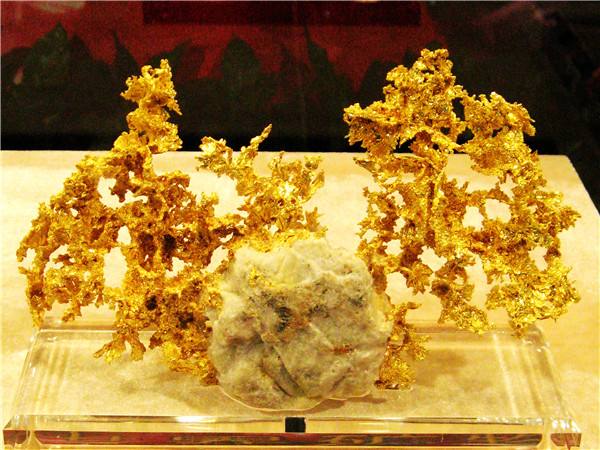
Links:
Address: Room 909, 9th Floor, Science & Technology Building, Eastern Software Park, No. 90 Wensan Road, Hangzhou City, Zhejiang Province Telephone:0571-85115488

Scan with your phone
Open the mobile website